Europe • Location Strategy • Automated Food Retail • 2026 Guide
Best Locations for Pizza Vending Machines in Europe: The Data-Driven Site Selection Guide
Location is the single biggest factor that determines whether a pizza vending machine becomes a strong revenue generator or an underperforming asset. With the European vending machine market valued at €26.4 billion and over 5 million machines currently operating across the continent, strategic site selection separates profitable operators from those struggling to break even. This guide explains exactly how to identify high-footfall sites, evaluate demand using professional foot traffic analysis methodologies, and position your machine for consistent daily sales across Europe.
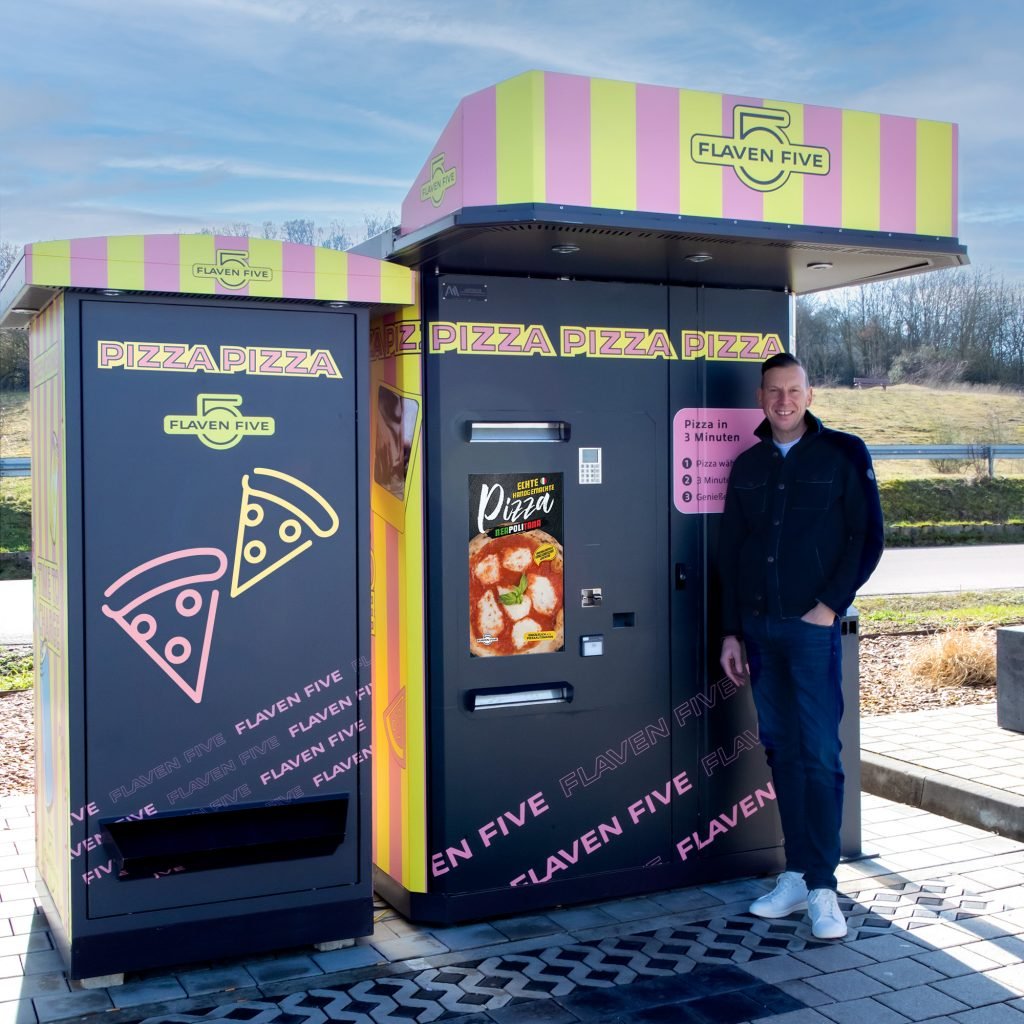
Table of Contents
Why Location Determines 80% of Your Pizza Vending Success
Even the most advanced pizza vending machine cannot compensate for a weak location. Industry data consistently shows that machines placed in high-traffic environments with limited late-hour food options outperform identical units by 300-400% compared to those in suboptimal positions.
The European automated retail landscape has evolved significantly. According to the European Vending & Coffee Service Association (EVA), workplace machine placement has shifted from 80% to 70% of total deployments as operators diversify into transit hubs, educational institutions, and mixed-use developments to capture changing consumer patterns.
Understanding captive audience dynamics is crucial. The most profitable locations combine three elements: consistent foot traffic, limited alternative food options, and natural dwell time that allows purchase decisions to mature. This is why transport hubs and 24-hour facilities consistently rank as top performers across European markets.
Key Market Insight
Europe maintains the highest vending machine penetration rate globally at one machine per 200 people, with approximately 4.4 million machines serving 25.4 million items annually. France has overtaken Germany as the largest market by revenue (€3.69 billion), while the Netherlands leads in per-capita consumption.
European Automated Food Retail Market Context
The European vending machine market reached USD 22.11 billion in 2024 and is projected to grow at a CAGR of 4.7% through 2030. This growth is driven by urbanization in major cities—London, Paris, Berlin, Frankfurt, Barcelona, Rome, and Athens—where fast-paced lifestyles increase demand for convenient meal solutions.
Critically, cashless payment adoption has reached 85% across European vending machines, making high-traffic locations with tech-savvy demographics even more valuable. Pizza vending machines specifically benefit from this trend, as the average transaction value (€8-15) aligns perfectly with contactless payment preferences.
Tourism also drives strategic placement opportunities. With millions of annual visitors seeking language-independent food options, machines placed at airports, train stations, and major attractions capture consistent international demand without the staffing challenges of traditional restaurants.
The High-Performance Location Scorecard
Use this framework to objectively evaluate potential sites before investment.
| Criteria | Optimal Standard | Scoring Weight |
|---|---|---|
| Daily Footfall | Minimum 500+ unique passersby during operating hours | 30% |
| Late-Hour Activity | Sustained traffic until at least 23:00 or 24/7 operation | 25% |
| Competition Density | No hot-food alternatives within 200-meter radius | 20% |
| Visibility & Access | Direct sightline from main walkways; no obstacles | 15% |
| Demographic Match | Students, shift workers, travelers, or young professionals | 10% |
The 7 Best Locations for Pizza Vending Machines in Europe
Based on performance data from operators across Germany, France, Italy, and the Netherlands, these location categories consistently deliver the highest ROI for automated pizza retail.
1 Transport Hubs & Transit Stations
Train stations, metro terminals, and bus interchanges combine heavy foot traffic with waiting time—an ideal environment for impulse food purchases. According to Grand View Research, operators strategically position machines at transit stations to capitalize on steady tourist and commuter streams.
Key Success Factors: Position near platforms or waiting areas where travelers have 5-15 minute dwell times. Ensure 24/7 accessibility for late-night rail connections. Consider language-neutral touchscreen interfaces for international travelers.
2 Universities and Student Housing Complexes
Educational institutions remain evergreen locations for automated food retail. Students seek fast, affordable meals outside traditional restaurant hours, making campuses one of the most reliable markets. The shift toward flexible learning schedules means demand extends beyond standard meal times.
Strategic Placement: Libraries, dormitories, study halls, and student union buildings. Cashless payment integration via student ID cards significantly increases transaction frequency.
3 Hospitals and Healthcare Facilities
Hospitals operate around the clock, generating continuous demand from staff, visitors, and overnight patients. Healthcare facilities represent a unique hybrid environment: closed-loop for employees (who often receive subsidized meal cards) and open-loop for visitors.
Optimal Zones: Emergency department waiting areas, staff break rooms, and visitor lounges. Machines with refrigerated sections are essential for perishable items in these high-stakes environments.
4 Petrol Stations and Travel Centers
Motorists value speed and convenience above all else. When traditional kitchens close, automated pizza becomes an attractive alternative for travelers on long-distance routes. The rise of EV charging stations has created new opportunities, as drivers wait 20-40 minutes for vehicle charging.
Placement Strategy: Highways connecting major cities (Autobahn in Germany, Autoroute in France) and urban charging hubs. Visibility from fuel pumps or charging bays is critical.
5 Manufacturing Plants and Industrial Parks
Manufacturing locations hold the #1 position for vending machine density in Europe, housing hundreds or thousands of workers with limited dining options and fixed break times. This creates a captive audience with strong need for quick meals, particularly during night shifts when canteens are closed.
Operational Advantage: 24/7 operations mean potential for round-the-clock sales. Employee card payment systems reduce cash handling and increase transaction speed.
6 Hotels and Hospitality Hubs
Hotels and motels represent 9% of European vending placements, up from 7% pre-pandemic as tourism rebounds. Guests arriving on late flights or seeking midnight snacks without room service delays drive consistent demand.
Prime Spots: Lobby areas near elevators, ice machines, or conference centers. Apartment complexes with laundry rooms also show strong performance due to guaranteed dwell time.
7 Entertainment and Sports Venues
Arenas, stadiums, casinos, and recreation centers generate surges of demand before, during, and after events. While seasonal, these locations command premium pricing and high transaction volumes during operational periods.
How to Evaluate Foot Traffic Like a Professional
Professional site selection relies on data, not intuition. Modern operators use multiple validation methods before committing to lease agreements.
Manual Observation Protocol
Visit the site at minimum four times: weekday morning (08:00-10:00), weekday lunch (12:00-14:00), weekday evening (18:00-20:00), and weekend afternoon. Document:
- Do people pause naturally in the zone?
- Is there visible hunger-driven behavior (checking phones for food options, looking around for restaurants)?
- Are nearby food options overcrowded or closed?
- Does traffic continue after 20:00?
Digital Foot Traffic Analysis Tools
Advanced operators leverage mobile GPS data and WiFi analytics for objective measurement. Platforms like Placer.ai provide visitor counts, dwell time analysis, and demographic breakdowns without manual counting.
For smaller operations, infrared sensors provide cost-effective entry counting, while video analytics with AI offer detailed behavioral insights including age ranges and group sizes.
Pro Tip: Correlate foot traffic data with actual sales from nearby food establishments if possible. A location with 1,000 daily passersby but three competing restaurants will underperform a site with 600 passersby and zero hot-food competition.
Locations That Consistently Underperform
Avoiding poor locations is as important as finding good ones. These site characteristics predict low ROI:
- Hidden corridors or basement levels with low natural visibility
- Seasonal tourist dependencies without year-round local traffic
- Saturated food courts with three or more hot-food alternatives within 100 meters
- Buildings with strict access control that close at 18:00 or require key cards
- High-speed walkways without natural pause points or seating nearby
- Residential-only areas without mixed-use foot traffic during daytime hours
Indoor vs. Outdoor Placement Strategy
The choice between indoor and outdoor deployment significantly impacts maintenance requirements and revenue potential.
Indoor Placement
- Weather protection extends machine lifespan
- Lower vandalism risk
- Steady climate-controlled environment
- Higher foot traffic consistency
- Reduced cleaning frequency
Outdoor/Sheltered Placement
- Captures late-night demand when buildings close
- Higher visibility from street traffic
- 24/7 accessibility without building hours restriction
- Premium placement opportunities at transport hubs
- Requires weatherproofing and security features
Outdoor units require UL or NAMA certification and compliance with local electrical and zoning regulations. The investment is higher, but the revenue ceiling often justifies the additional complexity for high-traffic outdoor locations.
Matching Machine Configuration to Location
Your machine specifications should reflect location-specific demands. High-traffic transport hubs require faster baking cycles and higher capacity than office building placements.
Compare technical specifications and operational requirements in our detailed analysis: Fresh vs. Frozen Pizza Vending Machines: Complete Technical Comparison.
Key configuration factors include baking speed (affects throughput during rushes), payment system diversity (cashless is essential in Northern Europe), and remote monitoring capabilities for unmanned locations.
Legal and Regulatory Considerations in Europe
Compliance requirements vary by jurisdiction but generally include business licensing, health department approval for food handling, electrical permits, and CE marking for equipment safety.
The European Commission’s CE marking guidance provides essential information on equipment standards, while the NAMA Machine Evaluation Program offers voluntary certification recognized by public health officials across EU member states.
Critical pre-installation checklist:
- Confirm site permissions and lease agreements with property owners
- Verify electrical infrastructure (208-240V single phase for most units)
- Obtain food business operator licenses from local authorities
- Ensure compliance with GDPR for any customer data collection
- Secure liability insurance for public vending operations
Scaling After Your First Successful Location
Successful operators typically validate their model with one high-performing site before expanding. The data gathered from your first location—peak hours, average transaction value, and customer demographics—becomes the template for site selection criteria.
Consider micro-market expansion within the same geographic area to optimize logistics and maintenance routes. According to EVA data, micro-markets and smart fridges showed 15% and 95% growth respectively, indicating strong consumer acceptance of automated food retail formats.
For financing multiple units, explore equipment financing options or the Small Business Administration loan programs (for US-based investors expanding to Europe) or equivalent EU small business funding through the Single Market Programme.
Frequently Asked Questions About Pizza Vending Locations
What is the minimum foot traffic needed for a profitable pizza vending machine?
Minimum viable foot traffic is approximately 300-500 unique passersby daily, but this varies by competition and demographics. Locations with 800+ daily passersby and limited food competition typically break even within 8-12 months.
Are pizza vending machines profitable in small towns?
Yes, particularly in “food deserts” or rural areas with limited late-night dining options. While volume is lower than urban centers, reduced competition and lower lease costs can maintain strong margins.
How much does location rent typically cost for vending machines?
Commission structures vary from 10-25% of gross revenue or fixed monthly fees of €200-800 depending on traffic volume and location prestige. Transport hubs command premium rates, while industrial parks may offer lower rates with higher volume guarantees.
What permits are required for pizza vending machines in Europe?
Required permits typically include business registration, food business operator license, electrical safety certification (CE marking), and potentially specific vending permits depending on municipality. NAMA certification simplifies approval in many jurisdictions.
Ready to Secure a High-Performing Location?
Get tailored site selection guidance, machine configuration recommendations, and detailed ROI projections for your specific European market. Our team analyzes foot traffic data and local competition to identify optimal placement opportunities.
Request a Free Location AssessmentResponse within 24 hours • No obligation consultation
Continue Reading
VendoPizza Location Strategy Team
Specializing in automated food retail placement across Germany, France, Italy, and the Netherlands. Our analysts combine foot traffic data, market research, and regulatory expertise to identify high-ROI vending locations.