Commercial buyer comparison · Europe · Fresh, refrigerated & frozen workflows
Fresh vs Frozen Pizza Vending Machines: Which Is Right for Your Business?
Compare the two current Vendo Pizza buying families—and understand the three food workflows buyers encounter in the wider market. The correct choice depends on food production, storage, cleaning, restocking, recipe flexibility, site access, budget and how many locations you intend to operate.
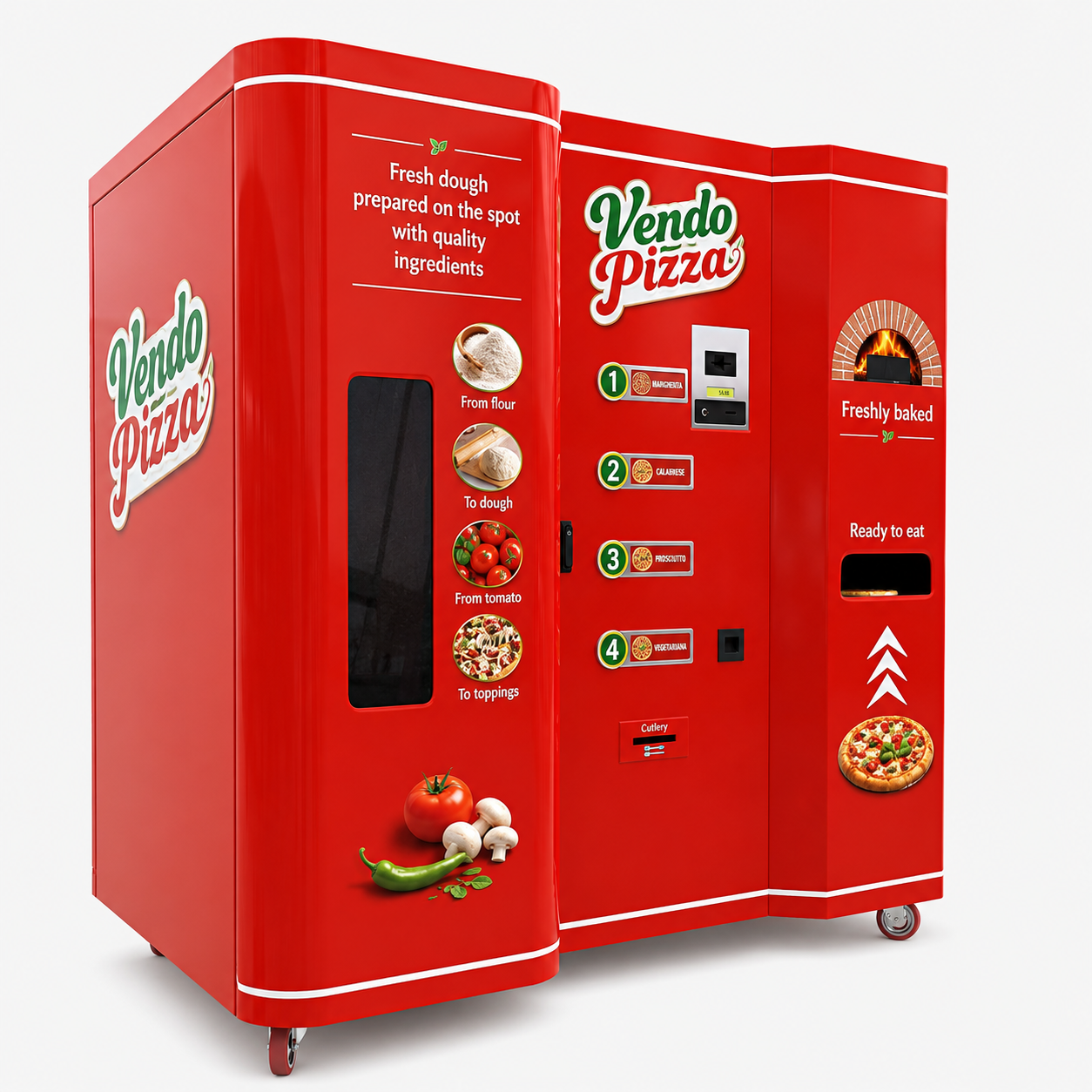
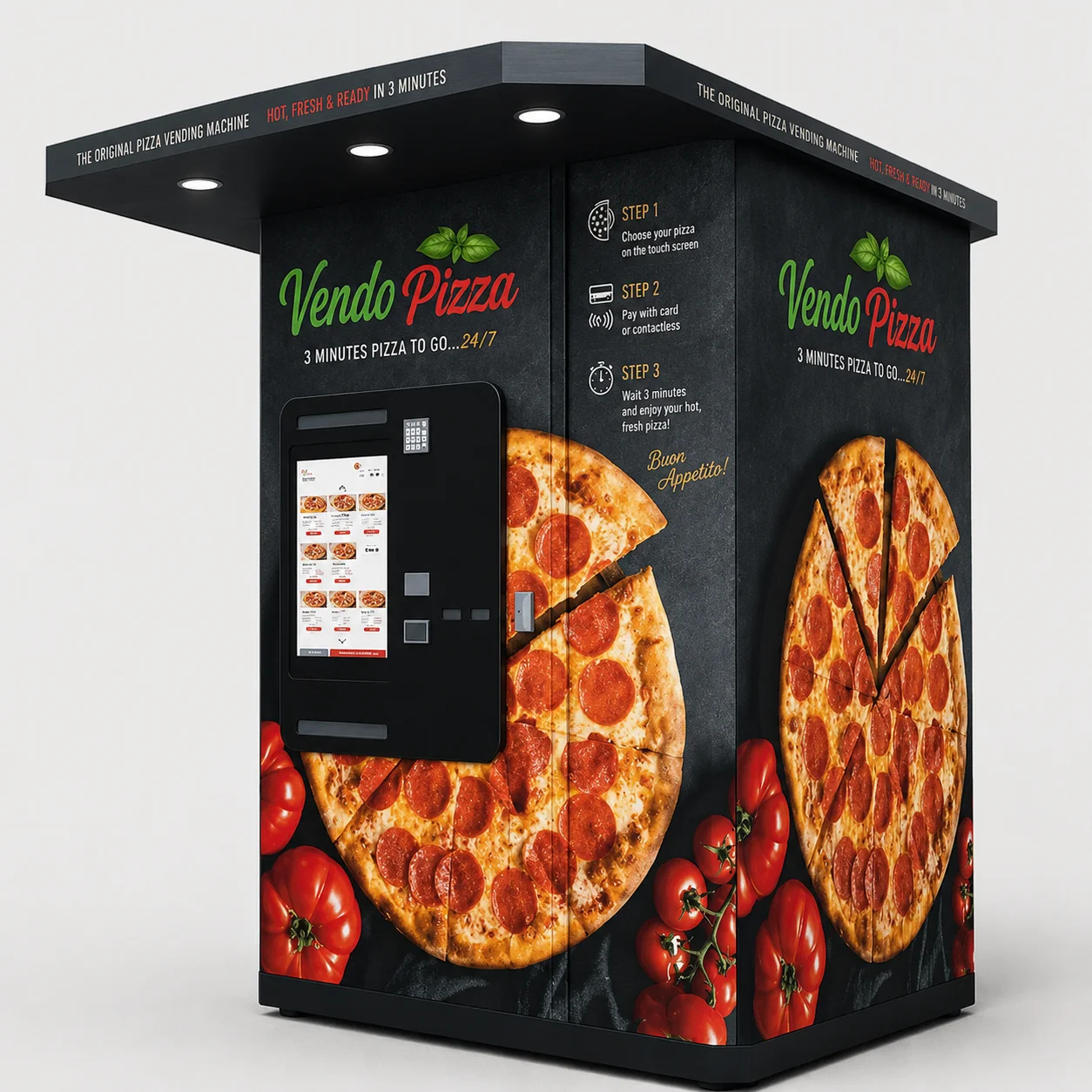
Fresh or Frozen: the short commercial answer
Choose Fresh when recipe control, a food-led customer experience and production flexibility justify a more involved operating routine. Choose Frozen when prepared-pizza supply, simpler replenishment, repeatable stock control and a lower machine entry price are higher priorities. Neither format is automatically more profitable, easier to sell or better for every location.
Fresh Series may fit better when…
You have—or can build—a stronger food-production and cleaning workflow and want more control over the pizza proposition.
- Recipe flexibility matters to the business
- You have a pizzeria, kitchen or production partner
- More frequent operator involvement is acceptable
- The higher starting investment fits the project
- You want Fresh capacities from 60 to 130 pizzas
Frozen Series may fit better when…
You want a prepared-pizza supply chain with straightforward loading and repeatable operation across one or several locations.
- Prepared frozen pizzas are available or easy to source
- Simpler replenishment is a priority
- Multi-site standardisation matters
- You want the lowest current Vendo Pizza entry price
- You want Frozen capacities from 60 to 120 pizzas
Understand the labels before comparing machines
There Are Three Food Workflows Behind the “Fresh vs Frozen” Search
The market often uses “fresh pizza vending machine” as a broad label. That can hide major operational differences. A machine may make dough internally, store externally prepared refrigerated pizzas, or store prepared frozen pizzas. These are not the same workflow.
True Fresh-Dough Preparation
The vending system mixes or forms dough and completes more of the pizza preparation inside the machine after the order. This can create a visible made-to-order proposition, but it also introduces ingredient loading, recipe calibration and additional food-contact cleaning points.
Refrigerated Fresh-Bake
The pizza is prepared in a pizzeria, central kitchen or production facility, transported under refrigeration, stored chilled in the machine and baked after selection. The pizza may be freshly produced even though the machine itself does not make the dough.
Frozen Stock-and-Bake
The pizza is prepared before delivery, frozen, transported through a frozen supply chain, stored frozen and transferred to the oven after purchase. Product standardisation can be easier, but freezing, packaging, stock rotation and cooking validation still matter.
Why this matters: the phrase “fresh baked pizza” describes what reaches the customer. It does not prove that fresh dough was mixed inside the machine. Current commercial systems use different combinations of dough preparation, refrigerated storage and frozen storage, so compare the exact quoted model rather than the marketing label.
Detailed buyer comparison
Fresh-Dough vs Refrigerated Fresh-Bake vs Frozen Stock-and-Bake
The table compares operating systems rather than claiming identical performance across every model. Exact temperature ranges, cooking times, capacity and cleaning procedures are configuration-specific.
| Decision factor | True fresh dough | Refrigerated fresh-bake | Frozen stock-and-bake |
|---|---|---|---|
| Food preparation | More preparation occurs inside the vending system. | Pizza is prepared externally and stored refrigerated. | Pizza is prepared externally, frozen and stored frozen. |
| Ingredient handling | Higher inside-machine involvement. | Higher at the kitchen/production stage. | Higher at production/freezing stage; lower at vending-site loading. |
| Recipe flexibility | Potentially high, depending on ingredient system. | High at the production kitchen. | High at production, but usually more standardised at vending sites. |
| Restocking | Ingredients/components according to machine design. | Prepared refrigerated pizzas. | Prepared frozen pizzas. |
| Cold-chain focus | Ingredients and refrigerated components. | Refrigerated product chain. | Frozen product chain. |
| Cleaning workload | Can include dough/ingredient preparation areas plus oven and transfer system. | Storage, transfer, oven and collection areas plus production-kitchen cleaning. | Freezer, transfer, oven and collection areas plus production controls. |
| Product standardisation | Depends on ingredient calibration and machine process. | Can be strong with controlled central production. | Often highly repeatable when frozen product and cooking programmes are standardised. |
| Operator skill | More machine-process and ingredient discipline. | More production-kitchen and refrigerated logistics discipline. | More frozen logistics and stock-control discipline. |
| Multi-site replication | Possible with strict ingredient, training and cleaning standards. | Strong when central production and chilled routes are organised. | Often simpler when one prepared product system serves several machines. |
| Primary risk | Underestimating preparation and cleaning complexity. | Underestimating production and refrigerated transport. | Assuming any frozen pizza will cook well in the selected machine. |
The work moves; it does not disappear
Compare the Daily Work Behind Fresh and Frozen Pizza Vending
Automated selling removes the need for a person to complete each retail transaction, but it does not eliminate production, cold-chain control, cleaning, replenishment, payment monitoring or maintenance.
Fresh / Fresh-Bake Operating Day
- Prepare ingredients or pizzas according to the selected workflow.
- Check product dimensions, recipes, packaging and stock dates.
- Transport food under the required temperature conditions.
- Load ingredients or prepared pizzas into the correct compartments.
- Verify temperature and machine-status readings.
- Inspect preparation, oven, transfer and customer collection areas.
- Clean food-contact and preparation components as required.
- Review sales, stock, payment and fault information.
Frozen Stock-and-Bake Operating Day
- Receive or produce frozen pizzas to the agreed specification.
- Maintain frozen storage and transport through loading.
- Rotate stock by date and product code.
- Load pizzas without breaking the required cold chain.
- Verify freezer status, alarms and product availability.
- Check cooking programmes and dispensing operation.
- Clean freezer-access, transfer, oven and collection areas.
- Review sales, stock, payments and fault information.
Current Vendo Pizza buying architecture
Vendo Pizza Fresh Series vs Frozen Series
For purchasing, Vendo Pizza uses two commercial families. The Fresh Series may use a true fresh or refrigerated fresh-bake workflow depending on the quoted configuration. The Frozen Series uses prepared frozen pizzas and a stock-and-bake process. The accepted quotation should name the exact model and workflow.
Fresh / Refrigerated Fresh-Bake
For operators who can support greater food-production involvement, recipe control and a higher machine starting investment.
Prepared Frozen Stock-and-Bake
For operators prioritising prepared-pizza supply, repeatable loading, lower machine entry price and easier multi-location standardisation.
| Model | Capacity | Indoor starting price | Outdoor starting price |
|---|---|---|---|
| Fresh 60 | Up to 60 pizzas | €16,000 | €18,000 |
| Fresh 80 | Up to 80 pizzas | €18,000 | €20,000 |
| Fresh 100 | Up to 100 pizzas | €20,500 | €22,500 |
| Fresh 120 | Up to 120 pizzas | €23,000 | €25,000 |
| Fresh 130 | Up to 130 pizzas | €24,500 | €26,500 |
| Frozen 60 | Up to 60 pizzas | €7,500 | Site-specific quote |
| Frozen 80 | Up to 80 pizzas | €9,000 | Site-specific quote |
| Frozen 100 | Up to 100 pizzas | €10,500 | Site-specific quote |
| Frozen 120 | Up to 120 pizzas | €12,500 | Site-specific quote |
These are base-machine starting prices, not total project costs. Payment equipment, connectivity, branding, freight, installation, site works, outdoor protection, taxes and optional equipment can materially change the final budget.
Decision support
Fresh vs Frozen Pizza Vending Machine Selector
This tool does not replace a site review or quotation. It identifies which family may deserve closer evaluation based on your operating capabilities.
Describe your operation
Compare both before ordering
You do not yet have a food-production model. Validate the location and pizza supply before locking in the machine family.
Purchase price is only one dimension
Fresh vs Frozen Costs: Compare the Whole Operating System
Frozen currently has the lower Vendo Pizza machine entry price, but total cost depends on the entire operation. A Fresh project may shift more cost into ingredients, production and cleaning; a Frozen project may shift more cost into prepared-pizza procurement, freezing and frozen logistics.
Food production & labour
Ingredients, kitchen work, preparation, recipe testing, packaging, refrigerated transport and more detailed cleaning can increase operating involvement.
Frozen product & cold chain
Prepared-pizza sourcing or production, freezing, frozen storage, transport and stock rotation become central to the operating model.
Site, payments & maintenance
Rent, electricity, payment processing, connectivity, maintenance, downtime, refunds and operator travel affect both formats.
Match the workflow to the operator and site
Which Format Fits Different Commercial Locations?
Location type alone should not decide Fresh or Frozen. The same university, petrol station or hotel can support either format if the food supply, operator access, customer proposition and service plan fit.
Pizzerias, hotels & premium retail
Fresh can be attractive where product identity and recipe control are central and the operator already has food-production capability nearby.
Factories, offices & campuses
Frozen can be attractive when prepared product, predictable replenishment and standardised multi-site operation matter more than made-inside-the-machine theatre.
Petrol stations & travel sites
Weather, hazardous-area planning, utilities, service access and security can matter more than the pizza format. Choose the cabinet and site first, then the food workflow.
One machine and a fleet are different businesses
Fresh vs Frozen for One Machine, 3–5 Machines or a Larger Network
Scaling is not simply a matter of buying more machines. Every extra location adds food production, stock, travel, cleaning, payment and maintenance events. Choose the workflow that your route and support system can repeat.
One machine
Either format can work. Prioritise location quality, product compatibility and the operating routine you can personally sustain. A single Fresh site may be practical if your kitchen is nearby; a single Frozen site may be simpler if you source prepared pizzas.
3–5 machines
Route efficiency becomes more important. Refrigerated Fresh can work with central production and disciplined chilled delivery. Frozen can simplify longer replenishment routes when product and cooking programmes are standardised.
6+ machines / fleet
Standard operating procedures, supplier consistency, spare parts, remote monitoring and service coverage become strategic. Frozen may be easier to replicate, but a well-designed central Fresh operation can also scale.
Food safety and machine documentation apply to both
Fresh and Frozen Have Different Cold-Chain Risks—but the Operator Owns Food Safety
EU food hygiene rules place primary responsibility for food safety on the food-business operator and specifically highlight the importance of maintaining the cold chain for foods that cannot be stored safely at ambient temperature, including frozen food. The machine’s CE documentation is a separate technical conformity issue.
Decision rule
Which Pizza Vending Machine Should You Choose?
Use the following as a decision framework—not a promise that one format will outperform the other.
Food production is a strength
You already operate a kitchen/pizzeria or can support a controlled production partner, recipe flexibility matters, and additional preparation/cleaning involvement fits the business.
Simplicity and repeatability matter most
You want prepared inventory, lower current machine entry price, straightforward replenishment and a format that can be standardised across multiple sites.
The location or food supply is not yet proven
Do not force a machine choice before you know the site, customer demand, pizza supplier, cold-chain method, installation conditions and realistic operating capacity.
Buyer questions
Fresh vs Frozen Pizza Vending Machine FAQ
What is the main difference between Fresh and Frozen pizza vending machines?
Fresh systems involve fresh or refrigerated food workflows and generally give the operator more recipe flexibility, while Frozen systems use prepared frozen pizzas stored and cooked after purchase. The exact workflow must be confirmed for the quoted machine.
Does a Fresh pizza vending machine always make dough inside the machine?
No. Some machines make or form dough after the order, while other Fresh systems use pizzas prepared externally and held refrigerated before baking. “Fresh” is not a precise enough technical description by itself.
Are all “freshly baked” pizza vending machines fresh-dough machines?
No. A refrigerated or frozen pizza can also be baked after the customer orders. “Freshly baked” describes the final baking event, not necessarily whether the dough was mixed inside the vending machine.
How does a Frozen pizza vending machine work?
The operator loads prepared frozen pizzas into the machine’s frozen storage system. After purchase, the machine retrieves the selected pizza, transfers it to the programmed oven cycle and dispenses it hot. Exact storage and cooking systems vary by model.
Which option is cheaper to buy?
Within the current Vendo Pizza range, Frozen machines have the lower base entry price: Frozen 60 starts from €7,500 indoor, while Fresh 60 starts from €16,000 indoor. Total project cost can still differ because food production, cold chain, site works, payments and installation are separate.
Which option is easier to operate?
Frozen often provides the simpler site-level replenishment workflow because pizzas arrive prepared and frozen. Fresh can require more production, ingredient or chilled-food work. However, a well-organised Fresh central kitchen can also make site operations highly repeatable.
Which requires more cleaning?
True fresh-dough systems can create more preparation and ingredient-contact surfaces inside the machine. Refrigerated and Frozen systems still require cleaning of storage, transfer, oven and collection areas. Follow the exact manufacturer cleaning procedure for the quoted model.
Which is easier to scale across several locations?
Frozen can be easier to standardise because the same prepared product and cooking programme can be distributed to several machines. Refrigerated Fresh can also scale effectively with strong central production and chilled logistics. Fresh-dough systems require disciplined ingredient calibration, training and cleaning across sites.
Can both Fresh and Frozen machines operate outdoors?
Yes, configured outdoor projects are possible, but outdoor suitability depends on the exact cabinet, documented temperature range, rain and solar exposure, electrical protection, drainage, security and service access—not only on the pizza format.
Which has more recipe flexibility?
Fresh and refrigerated Fresh-Bake usually offer more direct control over recipes and ingredients. Frozen products can still be custom-developed, but once a frozen supply chain is standardised, frequent recipe changes may require more production and cooking validation.
Can I use pizzas from my own pizzeria?
Potentially. Prepared-pizza systems can use pizzas from the operator’s own pizzeria or approved production partner when diameter, weight, thickness, packaging, storage, food safety and cooking programme are compatible with the selected machine.
How often must each type be restocked?
Restocking frequency depends on usable capacity, sales rate, product shelf life, food-safety limits and route planning. Do not use a fixed daily or weekly rule without data from the actual site and product.
Which is better for a first-time operator?
Frozen is often easier to understand operationally because it uses prepared stock, but the best first machine depends on location, food supplier, operating time, budget and service access. A first-time operator with an existing pizzeria may be better positioned for Fresh.
Which is better for petrol stations?
Either can work. For petrol stations, safe site positioning, hazardous-area review, outdoor environment, customer access and replenishment may be more important than Fresh versus Frozen. See the petrol-station buyer guide.
Does Fresh always make more profit?
No. Profit depends on selling price, transactions, food cost, rent, payment fees, labour, transport, waste, maintenance and downtime. Use the profit calculator with your own inputs.
Can I start with one machine?
Yes. Vendo Pizza accepts one-unit enquiries. Starting with one site can help validate demand, food supply and operating procedures before a larger rollout.
How do I get an exact Fresh or Frozen recommendation?
Provide the country and city, location type, indoor/outdoor plan, expected demand, available food production, preferred pizza format, capacity needs, quantity and timeline through the quotation form.
Choose the Workflow First—Then the Exact Machine
Tell us your location, food-production plan, number of sites, indoor or outdoor environment, capacity requirement and preferred operating complexity. We can then recommend Fresh, Frozen or a specific comparison between configurations.