Pizza Vending Machine Installation & Setup
Successful installation begins before the machine arrives. VendoPizza helps buyers review delivery access, placement, electrical supply, connectivity, environmental conditions, commissioning and operator handover for the selected machine and destination.
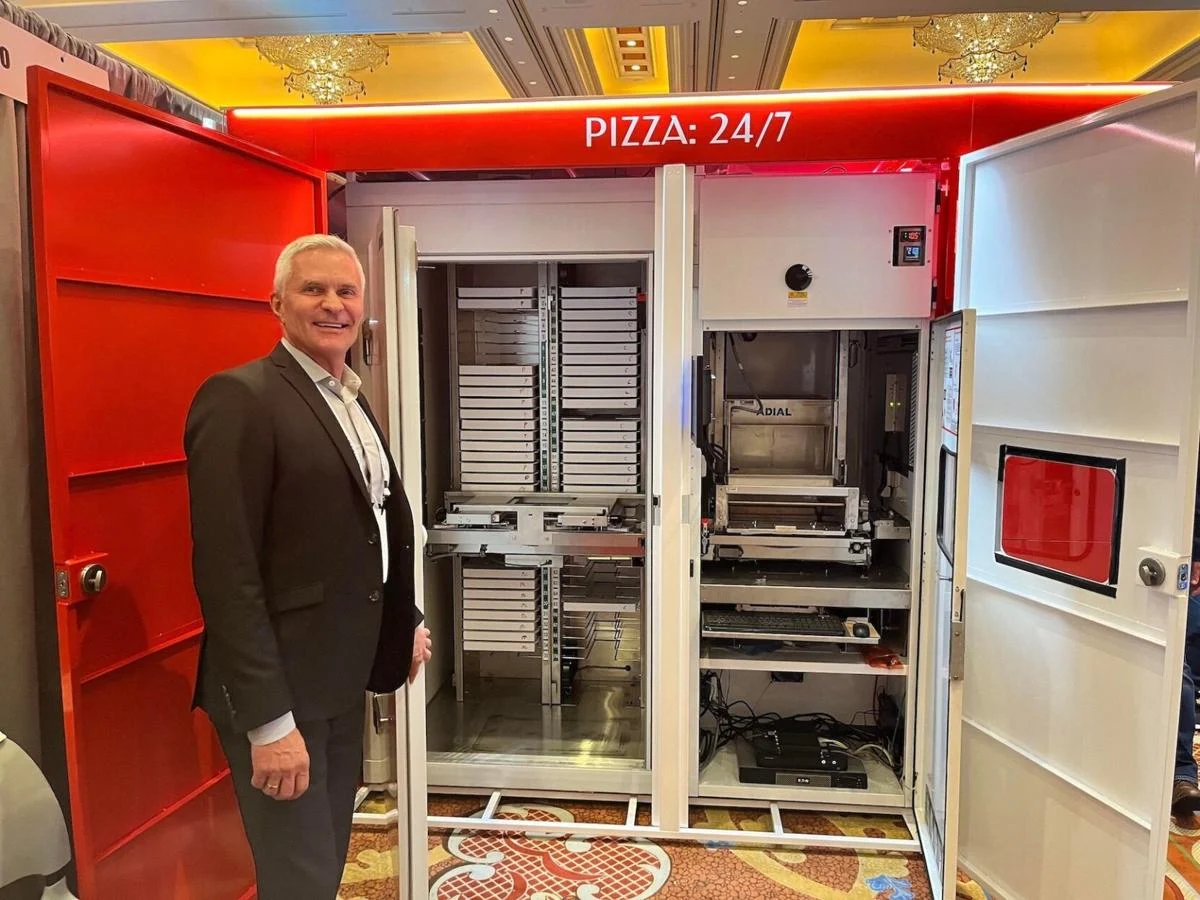
Do not prepare the site from generic specifications
Pizza vending machines can differ significantly in footprint, total weight, door clearances, ventilation, electrical demand, refrigeration, communications equipment, drainage and weather protection. The final site plan must be based on the technical sheet and installation instructions for the exact finished machine and configuration.
Do not assume that every model uses a standard domestic outlet, operates on 220–240 V single phase, is suitable for unrestricted outdoor placement or can be moved through a normal doorway. Written model requirements should be reviewed before construction, electrical work or transport is booked.
Confirm site readiness before dispatch
The buyer, property owner, installer and relevant contractors should review these areas early enough to correct any site problem before the delivery vehicle arrives.
Delivery access
- Vehicle access, unloading zone and delivery restrictions
- Door, gate, corridor, lift and turning dimensions
- Machine weight, floor loading and lifting requirements
- Stairs, kerbs, slopes and other route obstructions
Placement area
- Level, stable and load-bearing base
- Required service, door and ventilation clearances
- Safe customer circulation and queue space
- Protection from impact, vandalism and unauthorised access
Electrical supply
- Voltage, frequency, phase and maximum load
- Dedicated circuit and suitable protective devices
- Correct grounding or earthing arrangements
- Qualified electrical inspection where required
Environment
- Permitted temperature and humidity range
- Rain, sun, wind, dust and condensation exposure
- Ventilation and heat-rejection requirements
- Indoor, sheltered or rated outdoor configuration
Connectivity and payments
- Wi-Fi, Ethernet or cellular signal availability
- Payment terminal provider and account activation
- Firewall, SIM, router and remote-access requirements
- Local payment and telecommunications contracts
Local permissions
- Landlord or property-owner approval
- Food-business registration and hygiene procedures
- Planning, signage, accessibility or trading rules
- Fire, electrical and workplace requirements
Power, placement and utilities must match the selected model
Generic website figures are not a substitute for the final electrical diagram, technical sheet and installation manual.
Electrical and utility review
- Confirm rated voltage, frequency, phase, current and peak electrical demand.
- Confirm the plug, isolator, cable and circuit-protection requirements.
- Use appropriately qualified contractors for permanent electrical work.
- Assess power quality, voltage stability and surge-protection needs.
- Confirm any water, drainage, extraction or condensate requirements.
- Record the final utility setup for handover and future service.
Placement and operating environment
- Keep required clearances for doors, service panels and ventilation openings.
- Check whether anchoring, levelling or anti-tip measures are specified.
- Do not block heat discharge or refrigeration airflow.
- Confirm the permitted ambient temperature and humidity range.
- Use only an outdoor or sheltered configuration supported by written specifications.
- Provide suitable lighting, visibility and customer accessibility.
Electrical compatibility must be confirmed—not assumed
Some machines may use single-phase supply, while others can require three-phase power or a destination-specific configuration. Product conformity documentation and local electrical installation requirements are related but separate matters. A qualified local electrician may need to verify the final connection and protective measures.
From technical review to operational handover
Timing depends on production status, transport, site readiness, contractor availability, configuration and the scope purchased. No universal installation period applies.
Technical confirmation
Confirm the exact model, configuration, dimensions, weight, utilities, environment and documentation before accepting the installation scope.
Site preparation
Complete civil, electrical, connectivity, access, approval and food-operator preparations identified in the pre-installation checklist.
Delivery and positioning
Receive, inspect, unload and position the machine using suitable equipment and the agreed delivery responsibilities.
Connection and commissioning
Complete authorised connections, configuration, safety checks, functional tests and required payment or communications setup.
Handover and records
Record acceptance, outstanding items, training, manuals, serial number, settings, maintenance requirements and support contacts.
Clarify responsibilities before the machine ships
The quotation and sales contract should identify which party is responsible for each task and cost. The table below is a planning framework, not a substitute for the agreed transaction terms.
| Installation item | Buyer or site | VendoPizza or supplier | Qualified local contractor |
|---|---|---|---|
| Site dimensions and access survey | Provide accurate measurements, restrictions and photographs. | Provide machine dimensions and delivery requirements where available. | Assist with specialist access or lifting assessment if required. |
| Electrical preparation | Arrange a compliant supply based on the final model requirements. | Provide model-specific electrical information. | Design, install, inspect or certify the local electrical work where required. |
| Unloading and positioning | Provide access and any buyer-responsibility equipment stated in the order. | Coordinate only the services expressly included in the quotation. | Provide lifting, rigging or specialist transport where contracted. |
| Connectivity and payment accounts | Arrange internet, SIM, merchant and payment-provider accounts where required. | Provide supported interface and machine configuration information. | Configure local network or payment infrastructure where separately contracted. |
| Food-business and local approvals | Obtain registrations, permissions and operating procedures. | Provide available machine documentation for the selected configuration. | Provide regulated professional services where local law requires them. |
| Commissioning and handover | Nominate trained representatives and sign acceptance records. | Complete the scope stated in the accepted order documents. | Complete specialist checks or certifications within the contracted scope. |
Do not treat power-on as completed installation
Commissioning should verify that the machine has been positioned and connected correctly, that safety functions operate, that refrigeration or heating systems reach the required conditions and that the control, payment and communications functions behave as intended.
Product configuration, test products, food temperatures, packaging, pricing, tax settings, language, receipts, remote access and operator permissions may also need to be reviewed before public operation. The exact tests depend on the machine and its operating format.
Any defect, transport damage, incomplete work or unresolved configuration item should be recorded in the handover document instead of being left as an informal verbal agreement.
Training, maintenance, warranty and compliance remain separate
Installation is one part of the operating lifecycle. Use the relevant page for the next requirement.
Useful European Union installation references
These official links provide general background on electrical-product safety, CE marking and food hygiene. They do not replace the machine manual, local electrical rules or advice from the competent authority in the installation country.
Pizza Vending Machine Installation FAQs
Does VendoPizza provide installation in every country?
Installation availability and scope are confirmed by machine and destination. On-site work, local contractors, technician travel, lifting, labour and commissioning should not be assumed to be included unless they appear in the accepted quotation or sales contract.
How long does installation take?
There is no universal installation time. The schedule depends on site readiness, delivery access, electrical and network preparation, contractor availability, machine configuration, commissioning requirements and any unresolved work discovered during handover.
What electrical supply does a pizza vending machine require?
Electrical requirements vary by model. Confirm voltage, frequency, phase, current, peak demand, plug or isolator type, protective devices and grounding from the exact technical sheet before electrical work is completed.
Can the machine be installed outdoors?
Only where the selected configuration is documented for the intended environment. Outdoor or sheltered placement can require stated temperature limits, ingress protection, rain and sun protection, ventilation, anchoring and other site measures.
What should be completed before delivery?
Confirm the delivery route, unloading plan, floor capacity, placement clearances, utilities, internet or cellular signal, payment accounts, property approval and applicable local food, planning, accessibility, fire and electrical requirements.
Is operator training included?
Training scope varies by order. Manuals, remote guidance or on-site handover may be available, but the language, participants, timing and delivery method should be stated in the accepted commercial documents.
When does the one-year warranty begin?
The warranty commencement date must be taken from the accepted quotation, sales contract or model-specific warranty document. Installation or delivery does not automatically define the start date unless the written terms say so.
Who obtains local permits and food-business approval?
The buyer or machine operator is generally responsible for local property permission, food-business registration, operating procedures and destination-specific approvals unless a different allocation is expressly agreed in writing.
Request the exact installation requirements for your selected machine
Provide the preferred model, destination, installation environment, access information and available utilities. VendoPizza can then prepare the relevant technical and commercial requirements for review.