Airport food automation · Passenger & staff zones · European projects
Pizza Vending Machines for Airports in Europe
Plan automated hot-pizza service for airport terminals, staff areas and other approved airport locations. Vendo Pizza supplies Fresh and Frozen commercial machine families, while the airport project determines the permitted zone, concession approval, security route, utilities, payments, food-safety process and replenishment method.
- Fresh 60–130 and Frozen 60–120
- Landside and airside planning
- Card, contactless and mobile payment options
- Food-safety and allergen planning
- One-machine and multi-terminal projects
- European destination quotations
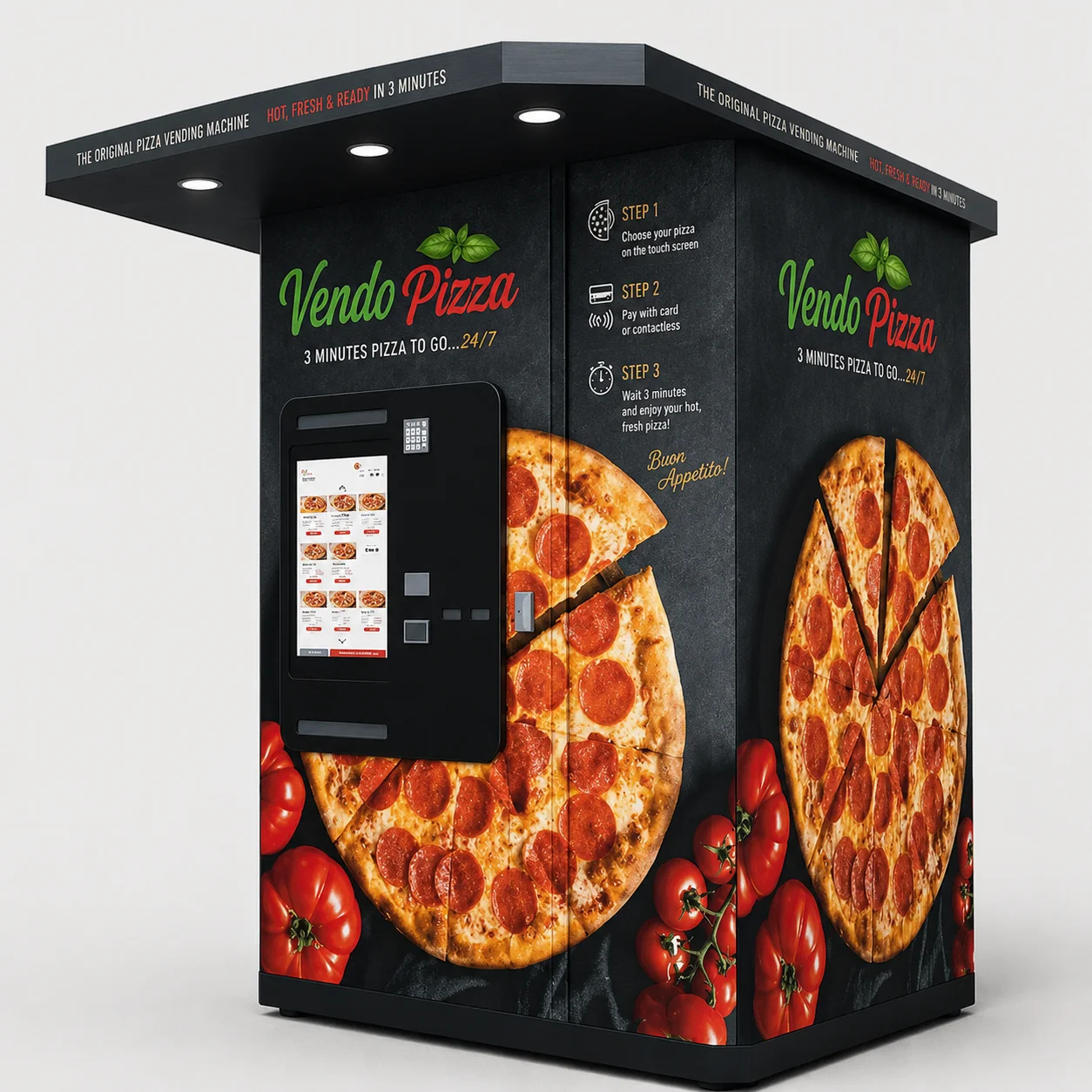
Can pizza vending machines be installed in airports?
Yes—subject to the airport operator, concession or landlord, security, food-safety and technical requirements for the exact location. The first question is whether the site is landside, airside or inside a security-restricted area. That affects delivery, replenishment, staff access and airport-supply controls. The machine must also fit the site’s electrical, ventilation, connectivity, fire-safety, accessibility and service-access requirements.
Start with the passenger or staff journey
Where Can an Airport Pizza Vending Machine Be Placed?
The correct machine depends on who can reach it, when they need food, how it will be replenished and what security boundary the operator must cross. Approval should therefore begin with the proposed airport zone rather than with a capacity or cabinet.
Arrivals and public terminal halls
Potentially simpler service access because the site is outside airside security, while concession, fire, electrical and food approvals still apply.
Fresh or FrozenGate piers and departure lounges
High passenger visibility can be attractive, but supplies, service staff and technicians may need to cross controlled security boundaries.
Security route requiredTransfer and waiting areas
Evaluate passenger circulation, queuing, concession boundaries, service access and the effect of flight-bank peaks on stock.
Capacity-ledCrew and airport-staff areas
Can support employees working outside normal catering hours. Access control and internal logistics determine replenishment practicality.
Operational fit firstParking and rental-car connections
Candidate zones outside the main restaurant cluster. Confirm ownership, utilities, weather exposure, hours and customer security.
Often landsideBack-of-house locations
May suit employee food service but should be evaluated separately from public passenger retail because vehicle and staff access dominate the project.
Site-specific| Zone | Typical customer | Key approval issue | Replenishment concern | Machine priority |
|---|---|---|---|---|
| Landside public hall | Passengers, meeters, drivers | Concession / public-space approval | Normal terminal service route | Visibility, payments, queue space |
| Airside departures | Screened passengers | Security-restricted-area rules | Supplies and staff crossing security | Reliability, stock planning, service access |
| Transfer zone | Connecting passengers | Passenger-flow / concession boundary | Restricted service windows | Fast ordering, multilingual UI |
| Staff area | Airport employees | Access rights / shift patterns | Internal logistics | Operational simplicity |
| Parking / rental car | Passengers and staff | Site ownership and hours | Vehicle access often easier | Weather, security, connectivity |
Choose the food workflow after defining the airport zone
Fresh or Frozen Pizza Vending for an Airport?
Both machine families can suit airports. The correct choice depends on product supply, security restrictions, replenishment frequency, desired food proposition and the operator’s ability to clean and service the machine inside the approved airport window.
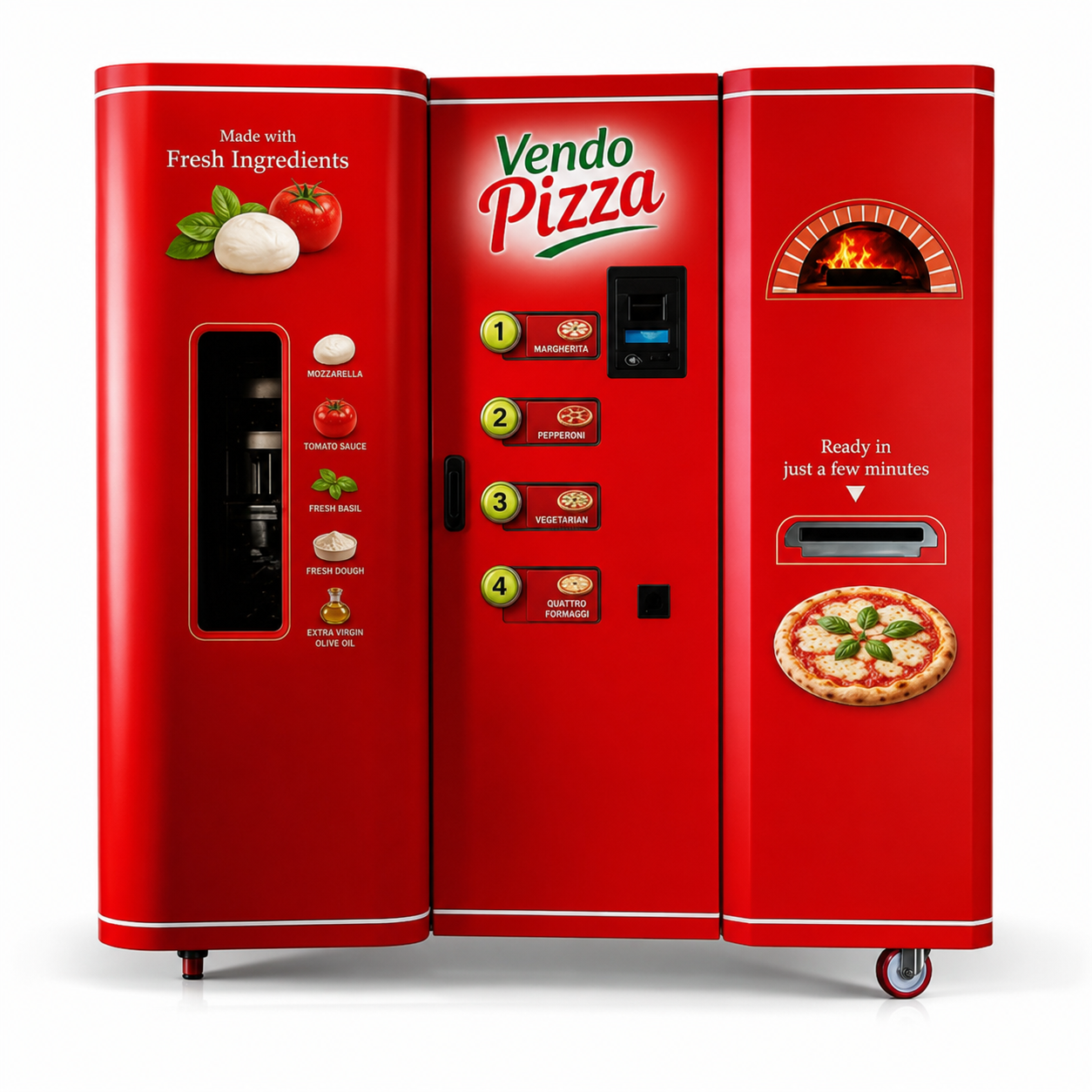
Fresh / Refrigerated Fresh-Bake
Indoor from €16,000For operators able to support a more involved fresh-food workflow, ingredient management and cleaning routine.
- Fresh 60, 80, 100, 120 and 130
- True fresh-dough or refrigerated fresh-bake by platform
- Recipe and ingredient validation required
- Useful where the food-preparation proposition matters to the concession
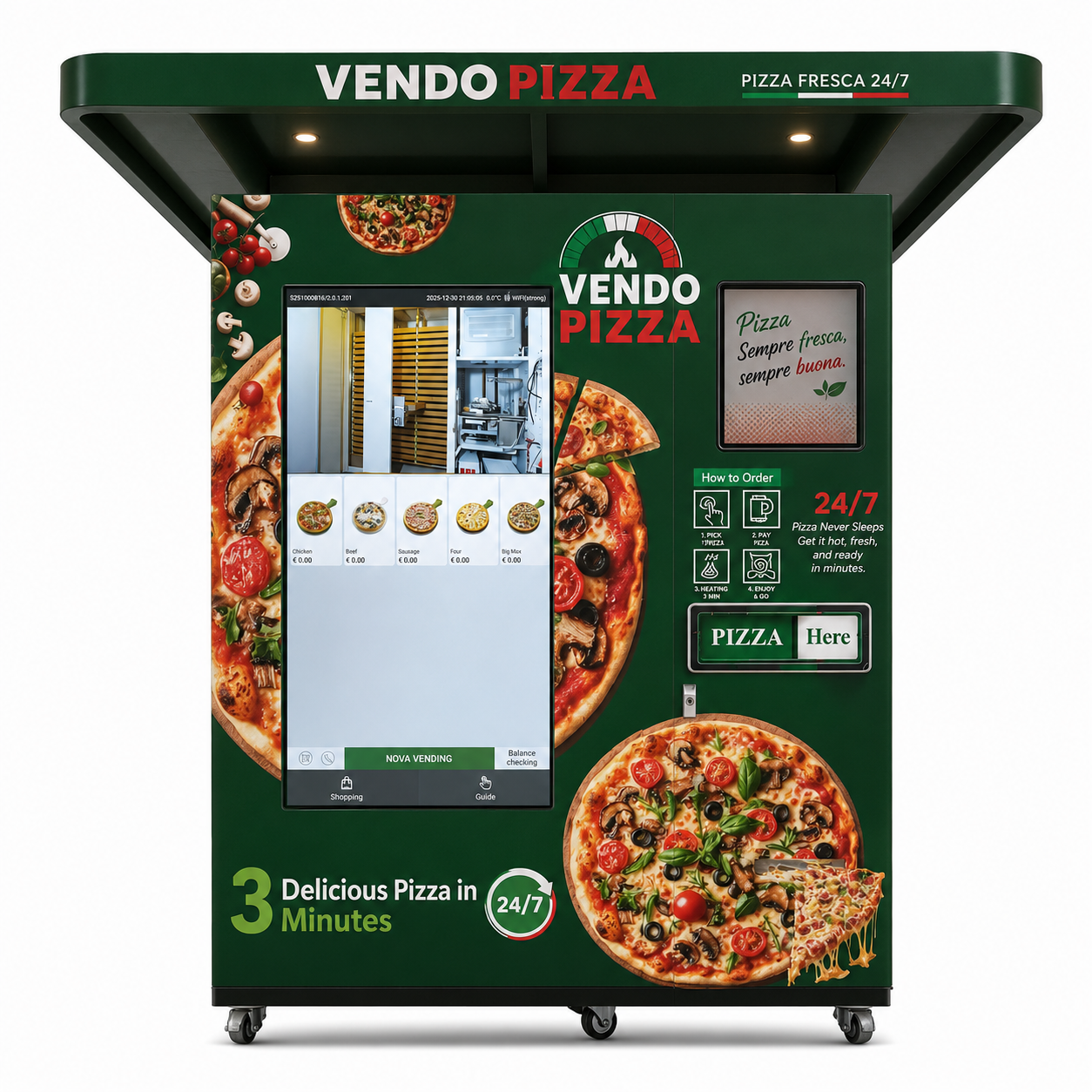
Prepared Frozen Stock-and-Bake
Indoor from €7,500For airport projects prioritising prepared inventory, repeatable loading and simpler product standardisation.
- Frozen 60, 80, 100 and 120
- Prepared frozen pizza inventory
- Generally simpler replenishment than ingredient-led Fresh systems
- Can suit passenger or staff zones where standardisation is a priority
Airport-specific operating constraint
Landside, Airside, Security and Replenishment Planning
EU aviation-security rules distinguish landside, airside and security-restricted areas. Access to airside is restricted, and supplies intended to be sold or used in security-restricted airport areas are subject to security controls. Airport procedures therefore matter directly to replenishment and maintenance.
Define the boundary
Record whether the machine is landside, airside or inside another controlled zone before designing the replenishment route.
Map the supply route
Identify where food, packaging, cleaning materials and service parts enter the airport and what controls apply.
Confirm staff access
Determine who can replenish, clean and service the machine, what airport identification or screening is required and when access is allowed.
Plan secure stock
Back-stock may need approved storage rather than being held beside the machine.
Control technician visits
Tools, replacement parts and contractor access should follow the airport’s security and maintenance procedures.
Define waste removal
Food, packaging and cleaning waste need an approved hygiene and security route.
Technical approval before delivery
Airport Installation and Utility Requirements
Airport facilities teams normally need more than a brochure. The technical submittal should identify the exact machine, dimensions, weight, power, heat/ventilation, network requirements, service clearance and environmental limits.
Site and building information
Confirm these before final machine selection.
- Allocated footprint
- Width, depth, height and queue/collection space
- Delivery route
- Loading dock, doors, lifts, turning space and restricted routes
- Floor loading
- Machine weight and structural/floor requirements
- Electrical supply
- Available voltage, phase, current and circuit capacity
- Ventilation
- Heat rejection, clearance and landlord HVAC rules
- Connectivity
- SIM, approved Wi-Fi/Ethernet or isolated-network requirements
- Fire / life safety
- Placement, egress, alarms and airport fire-safety review
- Service access
- Space and time windows for cleaning, restocking and technicians
Machine technical submittal
The supplier file should match the purchased configuration.
- Manufacturer / model
- Exact manufacturer and machine code
- Capacity / workflow
- Fresh or Frozen family and planned capacity
- Dimensions / weight
- Final cabinet and shipping data
- Power
- Rated power, maximum current and phase
- Environment
- Permitted temperature/humidity and indoor/outdoor status
- Network
- Payment and machine-management connectivity
- Conformity
- Applicable documents for the exact quoted model
- Maintenance
- Service access, schedule and parts process
Fast checkout in a travel environment
Airport Payments, Connectivity and Accessibility
Airport customers may be travelling quickly, using foreign-issued cards or navigating in a second language. Plan clear pricing, supported cards/contactless methods, reliable connectivity, visible customer support and an accessible user interface.
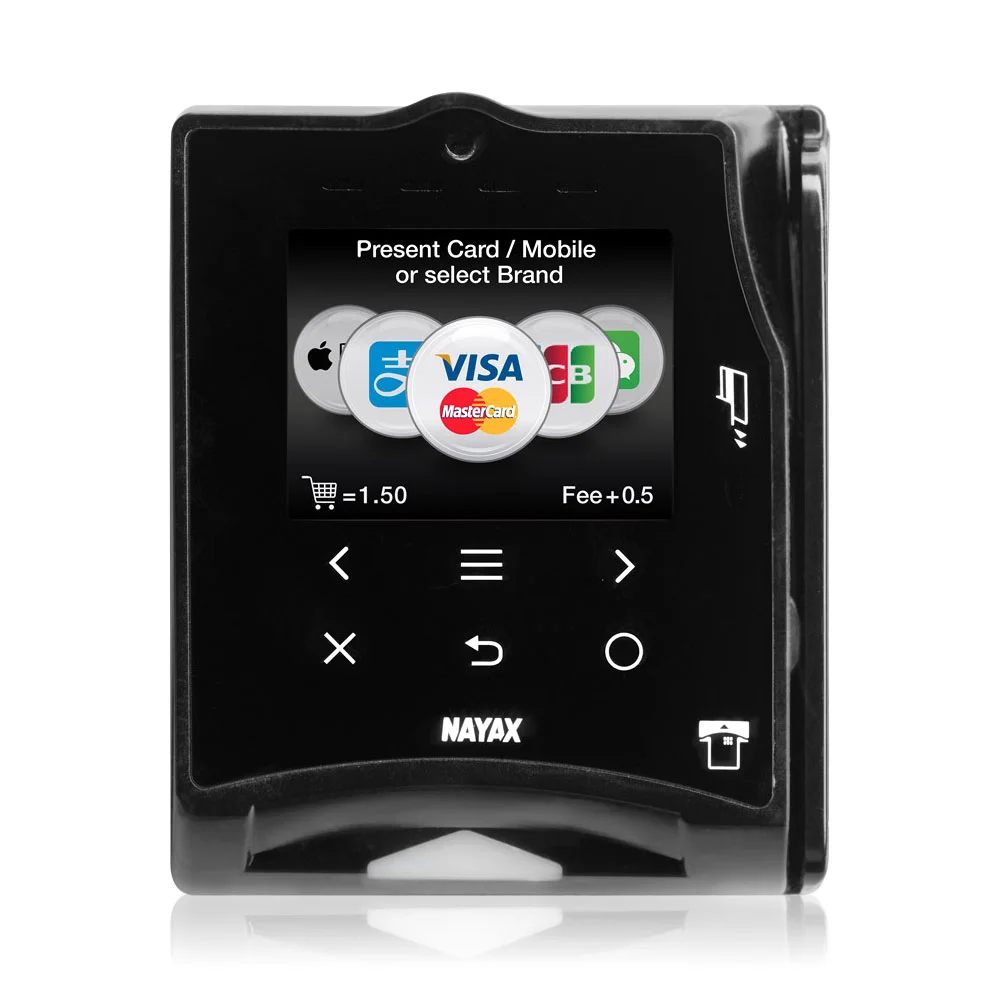
Cashless-first planning
Card, contactless and compatible mobile-wallet payments reduce dependence on local cash. The selected terminal must still support the destination, currency, acquirer and merchant account.
Reliable connectivity
Payment and remote-management systems may use cellular data, airport-approved Wi-Fi or Ethernet. Airport IT policies can restrict access, so the method should be agreed before installation.
Accessibility
Review touchscreen height, font size, contrast, audio/tactile options and payment-terminal accessibility with the airport and equipment suppliers. In the EU, the European Accessibility Act is relevant to covered payment and transport services and its national implementation should be checked for the project.
Food rules still apply without a cashier
Food Safety, Allergens and Cleaning at Airports
The airport concessionaire or food business operator remains responsible for a safe food process. EU hygiene rules explicitly include vending machines and address siting, cleanability, waste and suitable temperature conditions.
Approved supply chain
Define where pizzas or ingredients are produced, transported and held before loading.
Temperature control
Maintain and monitor the storage conditions required by the selected Fresh or Frozen workflow.
Allergen information
Provide mandatory product and allergen information in the format required for the destination.
Cleaning plan
Assign daily and scheduled cleaning of food-contact and customer-facing areas.
Stock rotation
Use documented shelf-life and date-marking procedures.
Waste route
Plan hygienic removal of food, packaging and cleaning waste within airport procedures.
Traceability
Maintain supplier, batch and incident records appropriate to the food process.
Corrective action
Define the response to temperature excursions, power failure, contamination concerns or faults.
A 24-hour terminal still needs an operating team
Operating an Airport Pizza Vending Machine Day to Day
Airport vending should be planned as a service operation, not passive machine placement. Replenishment, cleaning, fault response, refunds and technician access need to work inside the airport’s allowed windows.
Opening check
Review machine status, payments, temperature, stock and unresolved alerts.
Replenish to demand
Use real sales by time and zone to build the load rather than filling blindly.
Clean on schedule
Coordinate cleaning with food-safety rules and airport access windows.
Respond to faults
Define remote triage, refunds and technician access when a fault cannot be solved remotely.
Manage stock-outs
Adjust service visits when flight peaks or disruption changes demand.
Review waste
Track expiry, spoilage and unsold stock to improve menu and load levels.
Coordinate stakeholders
Keep airport operations, concession, security and maintenance contacts current.
Document service
Use uptime, stock, tickets and cleaning records to manage the concession professionally.
Airport Project Cost Goes Beyond the Machine Price
Fresh and Frozen starting prices help equipment budgeting, but airports add concession, security, utilities, logistics and service requirements. Request one written scope that separates the machine from airport-specific and site costs.
Authority and documentation
Airport Security, CE, Food Hygiene and Accessibility References
An airport concession can touch several compliance areas. Treat the machine file, airport security process, food-business procedure and payment/accessibility obligations as separate workstreams.
Machine Documentation
Exact model identity, technical sheet, manuals and applicable conformity documents.
02Food Safety
Hygiene, temperature, allergens, cleaning, traceability and food-business responsibility.
03Payments & Connectivity
Terminal, merchant setup, currency, wallets, SIM/network and remote management.
04Warranty & Service
Coverage, maintenance, parts and technician-access planning.
Defines landside, airside and security-restricted areas and common airport security controls.
Official EUR-Lex textEU implementing rules address security controls for supplies sold or used in restricted airport areas.
Official implementing regulationIncludes vending machines in requirements for siting, cleanability and temperature conditions.
Official EUR-Lex textEU accessibility framework relevant to covered payment and transport environments.
European Commission informationFrom concession concept to approved installation
Airport Pizza Vending Procurement Checklist
A useful airport quotation starts with the site dossier, not a request for the biggest machine. The sequence below reduces rework between the airport, concessionaire, operator and equipment supplier.
Define the airport zone
Terminal/building, landside or airside, passenger or staff use and hours.
Confirm site approval
Concession consent, footprint, access route, utilities, security and facilities rules.
Select the workflow
Fresh or Frozen based on supply, access, cleaning and customer proposition.
Validate the technical package
Capacity, dimensions, power, environment, connectivity, payments and documents.
Issue written quotation
Machine, options, assumptions, freight, installation, warranty, terms and timing.
Airport project questions
Pizza Vending Machines for Airports FAQ
These answers are planning guidance. The airport operator’s rules, accepted quotation, exact technical sheet and food-business procedures control the installation.
Can a pizza vending machine be installed airside?
Potentially, if the airport operator and concession approve the location and the project satisfies applicable security, supply, technical and food requirements. Airside access is restricted, so replenishment, staff and technician access must be planned first.
Is landside installation easier than airside?
Landside can simplify some security logistics because the machine is outside the restricted airside boundary, but airport/landlord approval, utilities, food safety, public-space planning and service access still apply.
Which is better for an airport: Fresh or Frozen?
Neither is universally better. Fresh can support a stronger made-to-order proposition but needs more food-operation involvement. Frozen can simplify standardised stock replenishment. Choose from the actual zone, security route and operating capability.
How much does an airport pizza vending machine cost?
Fresh indoor machines start from €16,000 and Frozen indoor machines from €7,500 before VAT, freight, payment hardware, installation and airport-specific costs. Capacity and configuration change the price.
What capacity should an airport choose?
Choose capacity from expected demand and replenishment frequency, not airport size alone. Fresh offers 60–130 planning capacities and Frozen 60–120. Reliable service access can matter more than maximum capacity.
Can the machine accept international cards and contactless payments?
Supported cards depend on the selected terminal and acquiring provider. Confirm accepted schemes, local transaction currency, contactless/mobile wallets, merchant setup and settlement before ordering.
Does the machine need airport Wi-Fi?
Not necessarily. Connectivity may use cellular data, approved Wi-Fi or Ethernet depending on the machine and airport IT policy.
How are pizzas or ingredients taken through airport security?
The procedure depends on the airport zone and security programme. EU rules subject airport supplies in security-restricted areas to security controls, while the airport operator defines the practical process.
Who is responsible for food safety?
The food business operator remains responsible for sourcing, transport, temperature control, hygiene, cleaning, allergens, traceability and corrective action under applicable rules.
Can airport staff use a separate machine?
Yes. Staff and crew areas can be evaluated separately from passenger retail. Machine choice should reflect staff population, shift pattern, access rules and replenishment route.
Can the machine operate 24/7?
Many commercial configurations can remain available around the clock if the airport permits it and food, payments, cleaning and fault response can be maintained. Availability does not guarantee demand or profitability.
What information is needed for an airport quotation?
Provide airport/country, terminal or building, landside/airside status, proposed location, concession holder, quantity, expected demand window, preferred Fresh/Frozen workflow, available power, payment requirements, access restrictions and target installation date.
Build the Airport Site Dossier Before Ordering the Machine
Send the airport zone, concession context, access route, utilities, replenishment plan and required capacity. Vendo Pizza can then shortlist a Fresh or Frozen configuration and prepare a destination-specific commercial quotation with technical, delivery, payment and support scope in writing.
Airport commercial page reviewed for deployment, security and product-family consistency: September 2026.