Fresh vs Frozen Pizza Vending Machines (2026 Guide)
Choosing between fresh (made-to-order) and frozen (heat/cook-to-serve) pizza vending machines affects your customer experience, your daily routines, and how fast you can scale in Europe. This guide compares both formats in plain language so you can pick the right model for your location.
Browse by category: Fresh Machines • Frozen Machines • Start with One Machine • Support & Service
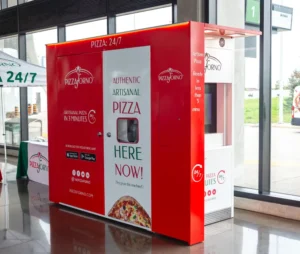
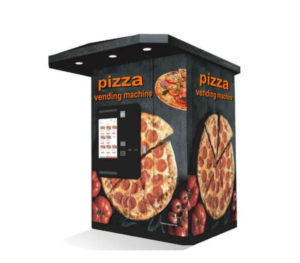
Quick Decision: Fresh or Frozen?
Choose Fresh if:
- You want premium “freshly prepared” positioning.
- Your location benefits from the visual experience.
- You can manage more frequent ingredient routines.
Choose Frozen if:
- You want simpler daily routines and predictable output.
- Your site needs fast service during peaks and late hours.
- You prefer longer shelf life and easier refills.
Fresh vs Frozen Pizza Vending Machines: Key Comparison (2026)
Exact performance varies by model and configuration, but this table reflects how most buyers compare the two formats in real-world operation.
| Feature | Fresh (Made-to-Order) | Frozen (Heat/Cook-to-Serve) |
|---|---|---|
| Customer experience | Premium “freshly prepared” perception, stronger theatre effect. | Fast convenience and reliability, especially late-night. |
| Operations | More routines: ingredients, cleaning, consistent restocking. | Often simpler routines with predictable output. |
| Logistics | Higher complexity due to ingredient variety and freshness plans. | Moderate: longer shelf life can reduce refill frequency. |
| Best-fit locations | Experience-driven footfall, premium sites, quality-led demand. | Transit hubs, campuses, night-shift sites, high-throughput demand. |
| Scaling | Best when you can standardise routines and restocking across sites. | Often easier to standardise across multiple locations. |
Compliance & Real-World Buying Checks (Europe)
Buyers in Europe usually check hygiene, electrical safety, and cooling/refrigerant compliance early, especially for public locations. These references help you understand the frameworks often used around food operations and equipment placed on the EU market:
- Food hygiene framework: Regulation (EC) No 852/2004 (EUR-Lex) and the European Commission food hygiene overview .
- Electrical safety (EU market): Low Voltage Directive 2014/35/EU and EMC Directive 2014/30/EU .
- Refrigerants / F-gas policy: European Commission – F-gas legislation and Regulation (EU) 2024/573 (EUR-Lex) .
Practical checklist: confirm footprint and access route, electrical supply, cleaning routine, restocking plan, and service/support coverage in your country. If you want help choosing, request a quote.
Find the Right Setup for Your Country and Location Type
If you already know your placement, these pages help you pick models that match the environment: