Passive Income Vending Machines in Europe: Realistic Expectations & Semi-Passive Strategies
Vending machines can generate semi-passive income when operations are systematized and locations are optimized. With the European vending market valued at €26.4 billion and growing at 4.7% CAGR, pizza vending specifically offers higher margins than traditional snacks—averaging €8-15 per transaction versus €1-3 for conventional vending. This guide covers realistic profit expectations, scalability strategies, and the operational systems that transform vending from active work into sustainable passive income streams.

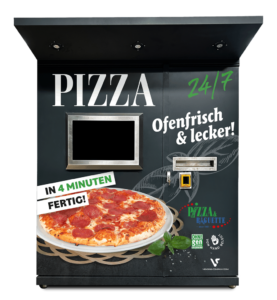
Table of Contents
Is Vending Really "Passive Income"? Setting Realistic Expectations
Vending is best described as semi-passive income. While machines operate 24/7 without constant supervision, they require regular restocking, maintenance, and location management. According to Nav's 2025 vending business analysis, you'll typically restock between once a week and once a month depending on location traffic and product type [^41^].
The key distinction: true passive income requires no material participation, while vending requires operational discipline. However, as industry guides note, one person can manage multiple machines, creating scalable income that approaches passive as you systematize operations [^4^].
Realistic Profit Expectations: What the Data Shows
Understanding actual revenue potential prevents disappointment. According to VendSoft's profit analysis, monthly gross revenue per machine typically ranges from $150 to $400 (€140-€370) for standard snack/drink machines, with net profit margins of 25-35% after costs [^45^].
However, pizza vending machines command premium pricing. While specific pizza vending data varies, food vending generally outperforms snacks. A case study from OptArray's vending analysis shows a busy location can generate $1,575 monthly gross with ~$530 net profit after accounting for 45% product costs, 15% location commission, and operational expenses [^37^].
Pizza vending machines typically achieve €8-15 per transaction compared to €1-3 for traditional vending. With 20-40 transactions daily in high-traffic locations, monthly gross revenue can reach €4,800-€18,000, though location commissions (10-25%) and food costs (35-45%) significantly impact net profit.
Scaling Income: From Side Hustle to Full-Time
VendSoft's scaling data suggests realistic monthly profit targets:
- 5 machines: €230-€460/month profit
- 10 machines: €460-€1,100/month profit
- 25 machines: €1,100-€2,800/month profit
- 50+ machines: €2,800-€5,500+/month profit
The top 20% of operators significantly outperform these averages through strategic placement and operational efficiency [^45^].
How to Make Vending Semi-Passive: Systems That Work
Your goal is creating predictable routines that minimize decision fatigue and maximize uptime. According to DFY Vending's passive income guide, implementing maintenance and support plans with 24/7 monitoring minimizes downtime and maximizes profits [^40^].
- Choose locations with predictable demand: Steady foot traffic beats "busy sometimes" locations. Manufacturing plants, hospitals, and transport hubs offer consistent demand patterns.
- Create strict restocking schedules: Set specific days/times weekly. Batch multiple locations on the same route to optimize travel time and fuel costs.
- Implement predictive maintenance: Address small issues before they cause downtime. Machine offline = income stopped completely.
- Leverage smart telemetry: Real-time sales data and inventory tracking reduce guesswork and enable just-in-time restocking.
- Build reliable support networks: Establish relationships with local technicians and spare parts suppliers for rapid issue resolution.
If the machine is offline, income stops. Choose models with proven reliability and establish service protocols that minimize downtime. As VendSoft emphasizes, profit is a process of running numbers, investing in systems, and improving weekly [^45^].
Start with One Machine: The Validated Path to Scale
Most successful operators begin with a single machine to test systems before expanding. This "lean startup" approach minimizes risk while providing real-world education. As VendSoft notes, your first machine is the "least expensive business course you'll ever take" [^45^].
What Actually Affects Performance: The Real Drivers
Understanding profit drivers helps prioritize investments. According to industry analysis, five factors determine profitability: location quality, product mix, inventory control, servicing efficiency, and cash reconciliation accuracy [^45^].
High-traffic areas (offices, schools, transit hubs) generate higher sales. A great machine in a weak site will underperform. Europe's highest-potential locations include transport hubs and co-working spaces in Germany, UK, France, and Spain [^43^].
Reliable restocking, hygiene routines, and fast issue handling protect revenue. AI-optimized operations can reduce spoilage by 33% and increase revenue 20% according to Technical University of Munich research [^38^].
- Is placement visible from natural walking paths?
- Does demand exist outside traditional restaurant hours (18:00-24:00)?
- Is 230V/50Hz power available with proper amperage?
- Can you service on a predictable weekly schedule?
- Are competing food options limited within 200 meters?
European Compliance & Regulatory Requirements
Operating legally across Europe requires understanding EU-wide directives and national implementations. These authoritative sources provide official guidance:
- Food Hygiene Standards: Regulation (EC) No 852/2004 establishes EU food hygiene requirements for all food business operators.
- Food Contact Materials: Regulation (EC) No 1935/2004 governs materials intended for food contact, ensuring chemical safety.
- CE Marking & Machinery Safety: European Commission CE Marking Guidance covers Machinery Directive (2006/42/EC), Low Voltage Directive (2014/35/EU), and EMC Directive (2014/30/EU) [^39^].
- Industry Technical Standards: European Vending Association (EVA) Technical Committee provides guidance on energy consumption, temperature measurement, and CE marking implementation [^42^].
CE marking is mandatory for the European Economic Area. According to TÜV SÜD guidance, this includes compliance with EN standards, proper Declaration of Conformity documentation, and registration in target countries [^39^]. Non-compliance can result in fines up to €20,000 under EU Regulation 178/2002.
Pizza Vending Machine Models for Passive Income
Selecting the right equipment impacts maintenance frequency and revenue potential. Modern machines with AI-driven inventory systems can reduce spoilage by one-third and increase revenue 20% through dynamic optimization [^38^].
Passive Income Vending: Frequently Asked Questions
Is pizza vending really passive income?
It's best classified as semi-passive income. While machines generate revenue 24/7 without constant supervision, they require weekly restocking, maintenance, and management. However, with strong locations and systematized operations, one person can manage multiple machines, creating scalable income streams that approach passive as you expand.
How much can I realistically earn from one pizza vending machine?
Realistic net profit ranges from €200-€800 monthly per machine after accounting for product costs (35-45%), location commissions (10-25%), and operational expenses. High-traffic locations with 30+ daily transactions can exceed €1,000 monthly net profit. Scale matters: 10 machines typically generate €2,000-€8,000 monthly combined profit.
Can I start with one machine and scale later?
Absolutely. Starting with one machine is the recommended approach. Use it to learn operational rhythms, understand your local market, and validate location selection criteria. After 3-6 months of data, replicate successful systems across additional sites. This lean approach minimizes risk while building expertise.
What should I include when requesting pricing?
Include your country (for compliance requirements), location type (indoor/outdoor, foot traffic level), and operational preference (fresh vs. frozen). If you have specific site constraints (space limitations, power specifications), include those for accurate configuration recommendations.
How do I choose between fresh and frozen pizza vending?
Frozen is typically chosen for operational simplicity, longer product shelf life, and consistent output—ideal for high-traffic locations and beginners. Fresh suits premium positioning and locations where "freshly made" justifies higher pricing, but requires more frequent restocking and ingredient management. We recommend based on your specific site demographics and operational capacity.
What certifications are required for European operation?
Mandatory requirements include CE marking (Machinery Directive 2006/42/EC, Low Voltage Directive 2014/35/EU), compliance with Regulation (EC) No 852/2004 for food hygiene, and Regulation (EC) No 1935/2004 for food contact materials. GDPR compliance is required if collecting customer data. NAMA certification is voluntary but recognized by health officials across EU member states.
Request Pricing and Availability in Europe
Share your country and location type. We'll recommend suitable models, provide ROI projections, and guide you through compliance requirements for your specific market.
Continue Your Research
VendoPizza Business Strategy Team
Specializing in automated food retail business models across Europe. Our analysts combine market data, regulatory expertise, and operational best practices to help entrepreneurs build scalable vending businesses.