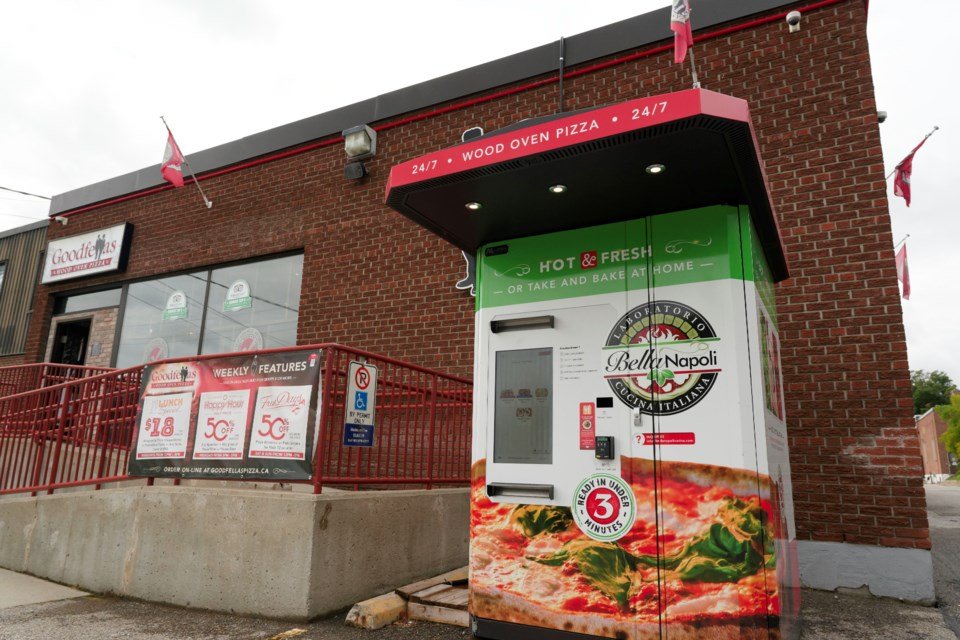
Pizza Vending Machines in Portugal: Automated Food Solutions for Europe’s Tourism Powerhouse
Portugal represents one of Europe’s most attractive markets for automated food retail, with 31.6 million tourists generating €27.7 billion in revenue in 2024, and Lisbon Airport handling a record 35 million passengers. The Portuguese tourism sector contributes 21.5% of national GDP and supports 1.2 million jobs, creating exceptional demand for 24/7 food solutions in transport hubs, coastal resorts, and urban centers [^76^][^78^][^84^].
Page Contents
Portugal Automated Food Retail Market Data
Why Portugal is Prime for Pizza Vending Machines
Portugal’s tourism sector is experiencing a “golden era” according to the World Travel & Tourism Council, with the sector contributing €60.6 billion to the economy in 2024 and projected to reach €62.7 billion in 2025. This creates exceptional opportunities for automated food retail in high-traffic tourist corridors [^84^].
The Portugal Smart Retail market is valued at $5 billion, with AI-powered retail automation growing rapidly. Lisbon and Porto dominate as technology hubs, with the Portuguese government’s “Digital Transition Program” supporting AI integration across retail sectors [^80^][^85^].
Market drivers in Portugal
- Record tourism: 31.6 million guests, 80.3 million overnight stays [^76^]
- Revenue growth: €27.7 billion total tourism receipts (+8.8% YoY) [^76^]
- Airport expansion: Lisbon Airport 13th busiest in Europe [^78^]
- Digital adoption: $5B smart retail market, AI integration growing [^85^]
- Year-round demand: Mild climate supports 12-month operations
- EU funding: Digital Transition Program supports retail tech [^80^]
Prime locations in Portugal
- Lisbon Airport: 35M passengers, €230M terminal expansion [^78^]
- Porto Airport: 7.9M passengers (+5.5% growth) [^82^]
- Faro (Algarve): 4.6M passengers (+7% growth) [^82^]
- Madeira: 2.7M passengers (+12% growth) [^82^]
- Lisbon Metro: High commuter footfall, tourist connectivity
- Coastal resorts: Algarve, Cascais, Estoril tourist corridors
- University cities: Coimbra, Porto student populations
Portugal Buyer Profiles: From Lisbon to the Islands
Portugal’s diverse geography creates distinct operator profiles. Mainland operators focus on airport and urban transit hubs, while island operators (Madeira, Azores) target seasonal tourist peaks with simplified logistics.
Mainland operators (Lisbon, Porto, Faro)
- Airport and metro station deployments for constant traffic
- Corporate catering for Lisbon’s growing business district
- University campuses in Coimbra and Porto
- Year-round operation with seasonal scaling
- Integration with €5B smart retail ecosystem [^85^]
- Multi-language support (Portuguese, English, Spanish, French)
Island & coastal operators
- Madeira: 12% passenger growth, strong cruise ship traffic [^82^]
- Azores: Emerging market with 4.5% traffic growth [^82^]
- Algarve resorts: Summer peak optimization (July-August)
- Simplified maintenance for remote locations
- Fresh machines for premium tourist positioning
- Local supply chain partnerships for ingredients
Portugal-Specific Winning Strategy
Success in Portugal requires aligning with the country’s tourism strategy of “quality over quantity”—focusing on higher-spending visitors rather than mass tourism. According to Turismo de Portugal, revenue growth is driven by increased spending per tourist, with fewer visitors generating more revenue [^77^].
Portugal Market Success Checklist
- Tourism-first placement: Target locations with 68.1% international visitor share [^89^]
- Quality positioning: Align with Portugal’s strategy of higher-value tourism [^77^]
- Airport priority: Lisbon’s 35M passengers offer €3+ retail spend per capita
- Digital integration: Leverage $1.2B AI smart retail automation market [^80^]
- Seasonal optimization: Scale for July-August peaks (12.6M overnight stays) [^89^]
- Multi-language UI: Essential for UK (2.5M), German (1.7M), US (2.3M) tourists [^86^]
- CE compliance: Meet EU Machinery Directive and Portuguese electrical standards (230V/50Hz)
Fresh vs Frozen: Portugal Market Fit
Portugal’s dual market—premium tourism in Lisbon/Madeira versus practical transit hubs in Porto/Faro—creates distinct equipment needs. Fresh machines align with Portugal’s quality tourism strategy, while frozen solutions suit high-volume transit locations.
Fresh pizza vending machines
- Best for: Lisbon Airport premium zones, Madeira hotels
- Aligns with “quality tourism” strategy and higher spending visitors [^77^]
- €10-15 pricing justified in premium locations
- “Freshly baked” appeal for international tourists
- Instagram-worthy for social media marketing
- Requires daily supply chain in major cities
Frozen pizza vending machines
- Best for: Porto Airport, metro stations, universities
- Lower operational complexity for high-volume sites
- Consistent output during rush periods
- Easier maintenance for remote island locations
- Cost-effective for budget-conscious student markets
- Longer shelf life reduces spoilage risk
Pizza Vending Machines in Portugal: FAQ
Common questions about entering Portugal’s automated food retail market.
Is Portugal’s vending market saturated?
What are the electricity requirements for Portugal?
How seasonal is the Portuguese market?
Which Portuguese airport offers the best ROI?
Do you provide local support in Portugal?
What languages should the machine interface support?
Ready to Enter Portugal’s €27.7 Billion Tourism Market?
Request a customized quotation for your Portugal location. Include your target city (Lisbon, Porto, Faro, Madeira), venue type (airport, metro, hotel, university), and preferred machine configuration. We’ll provide ROI projections, compliance guidance, and delivery timelines within 24 hours.