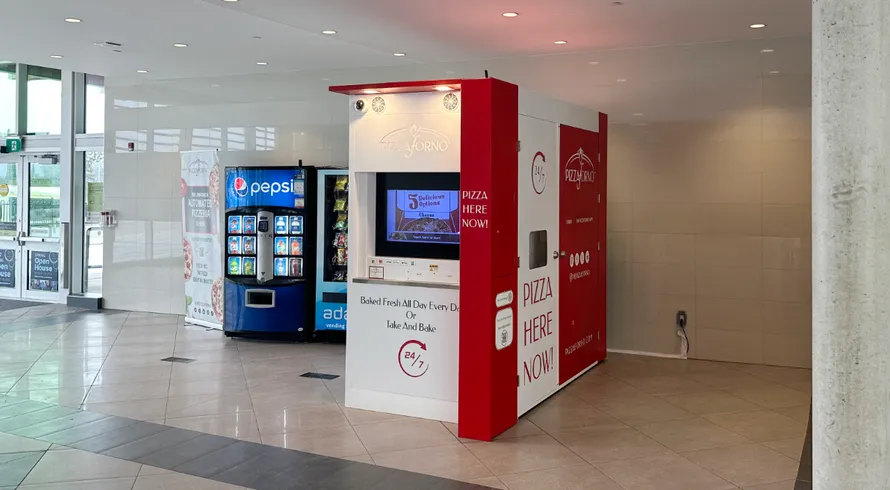
Pizza Vending Machines for Shopping Centres & Malls
Shopping centres bring together families, workers, and visitors who want convenient food without long queues. A pizza vending machine gives malls a 24/7 hot-food option that works alongside existing food courts and continues selling after restaurants close. According to ICSC research, food & beverage drives significant footfall in retail destinations.
New to retail vending? Start here: Start a Pizza Vending Business . See EU retail sector insights.
Why Shopping Centres Are a Strong Vending Environment
Malls have one advantage that many other locations don’t: people arrive already prepared to spend. Visitors are in a “leisure and purchase” mindset, and food is one of the highest-converting categories inside any retail destination. Pizza vending machines fit perfectly because they offer a complete meal quickly, with clear pricing and an easy ordering process. Research from retail consumer studies shows impulse food purchases increase dwell time.
Unlike small convenience vending, a pizza vending machine competes with quick-service food. That means success depends on the right placement, clear visibility, and offering something that complements (not fights) the food court. Done correctly, a pizza machine becomes the best “overflow option” during peak hours and the best “only option” after-hours. The future of retail destinations includes more automated food solutions.
Buyer Behaviour in Malls
Shopping centres create multiple customer segments that buy for different reasons. Retail psychology studies identify key patterns.
- Families: want fast meals for children without waiting in lines
- Teen/young adults: quick, affordable food between stores
- Workers: staff and retail employees during breaks
- Evening visitors: food after restaurants close
- Tourists & leisure shoppers: unfamiliar visitors seeking convenience
Why Pizza Sells in Retail Destinations
Pizza is high-demand, easy to understand, and works in shared spaces. Food labeling regulations ensure transparency.
- Familiar product with strong “impulse + hunger” conversion
- Portable and suitable for takeaway
- Works well as a shared meal (pairs, groups, families)
- Clear value perception compared to snacks
- Customizable options for different dietary needs
Best Placement Inside Shopping Centres & Malls
Mall placement is different from stations and hospitals. Here, your goal is to be visible and accessible without becoming “lost” in the food court. The best placements are where people naturally pause: entrances, elevators, cinema corridors, and leisure zones. Footfall analysis guides optimal placement.
High-Performing Placement Zones
- Near cinema / entertainment areas: evening footfall + after-hours demand
- Close to main entrances: high visibility for arriving visitors
- Near escalators/elevators: where traffic slows down
- Between anchor stores: strong flow without food-court competition
- Parking-level entrances: catches traffic when outlets are closed
Places to Avoid (Common Mistakes)
- Hidden corners with low sightlines
- Directly inside a crowded food court where signage is drowned out
- Narrow walkways that create congestion
- Areas with restricted service access (hard to restock)
- Zones with frequent events that block access
Quick Mall Placement Checklist
- Is the machine visible from at least 10–15 metres away?
- Can customers stop without blocking foot traffic?
- Is there an after-hours customer stream (cinema, parking, transit)?
- Can you restock and service without complex access rules?
- Is the area safe, monitored, and well-lit?
- Does mall management approve the location?
Peak Sales Times in Shopping Centres
Mall demand is not constant like transport hubs. It moves with shopping patterns. When your machine is placed correctly, it benefits from both peak shopping hours and off-peak moments when visitors still want food but restaurants are slow or closed. Retail sales patterns show clear weekly cycles.
Typical High-Demand Windows
- Lunch (11:30-14:00): shoppers + employees + quick meals
- Afternoons (14:00-17:00): families and leisure visits
- Evenings (17:00-21:00): cinema and late shopping
- Weekends/holidays: strongest overall footfall
- School holidays: extended family visiting periods
After-Hours Advantage
- Sales continue after food court closing
- Parking access captures late departures
- Works well near cinemas and entertainment zones
- Strong “last option” demand without staff
- Weekend late-night social traffic
Fresh vs Frozen Pizza in Malls
For malls, the best format depends on your target customer and how premium you want the offering to feel. If you want a “food-court alternative” with stronger branding, fresh machines shine. If you want a reliable, easy-to-run setup near parking or secondary corridors, frozen machines can be the most practical choice. Consider food waste reduction in your decision.
Fresh Pizza Machines (Premium Retail Feel)
Best for centres where you want strong presentation and a higher perceived value.
- Ideal near entertainment zones and main corridors
- Strong visual appeal for impulse purchases
- Great for branding and “wow factor”
- Higher perceived quality and pricing
- Appeals to leisure and tourist customers
Frozen Pizza Machines (Simple Logistics)
Best when you want predictable operations and straightforward restocking.
- Works well near parking-level entrances and secondary corridors
- Lower operational complexity for new operators
- Great for centres with limited storage access
- Consistent quality and longer shelf life
- Better for 24/7 unmanned operation
Operations: Restocking, Service, and Uptime
In retail environments, uptime matters because peak windows are short. If your machine is offline on a Saturday afternoon, you lose your best sales period. A simple operating routine and proactive maintenance plan make the difference between “average” and “top-performing.” Follow vending machine best practices for optimal performance.
Restocking Strategy for Malls
- Plan restocks before weekends and late-afternoon peaks
- Use back-of-house access where possible to avoid customer disruption
- Keep spare stock on-site if storage is available
- Monitor sales data to predict demand patterns
- Coordinate with mall management for access permissions
Maintenance & Uptime
- Schedule weekly cleaning and inspection checks
- Keep critical spare parts on hand
- Monitor machine alerts remotely
- Respond to issues within 24 hours
- Plan major maintenance during low-traffic periods
Frequently Asked Questions
Do I need special permits for a pizza vending machine in a mall?
How much space does a pizza vending machine need?
What’s the typical ROI for a mall location?
Can the machine accept multiple payment methods?
Ready to Add Pizza Vending to Your Mall?
Get a customised quote for your shopping centre location. Our team will help you choose the right machine, identify the best placement, and plan a successful launch.