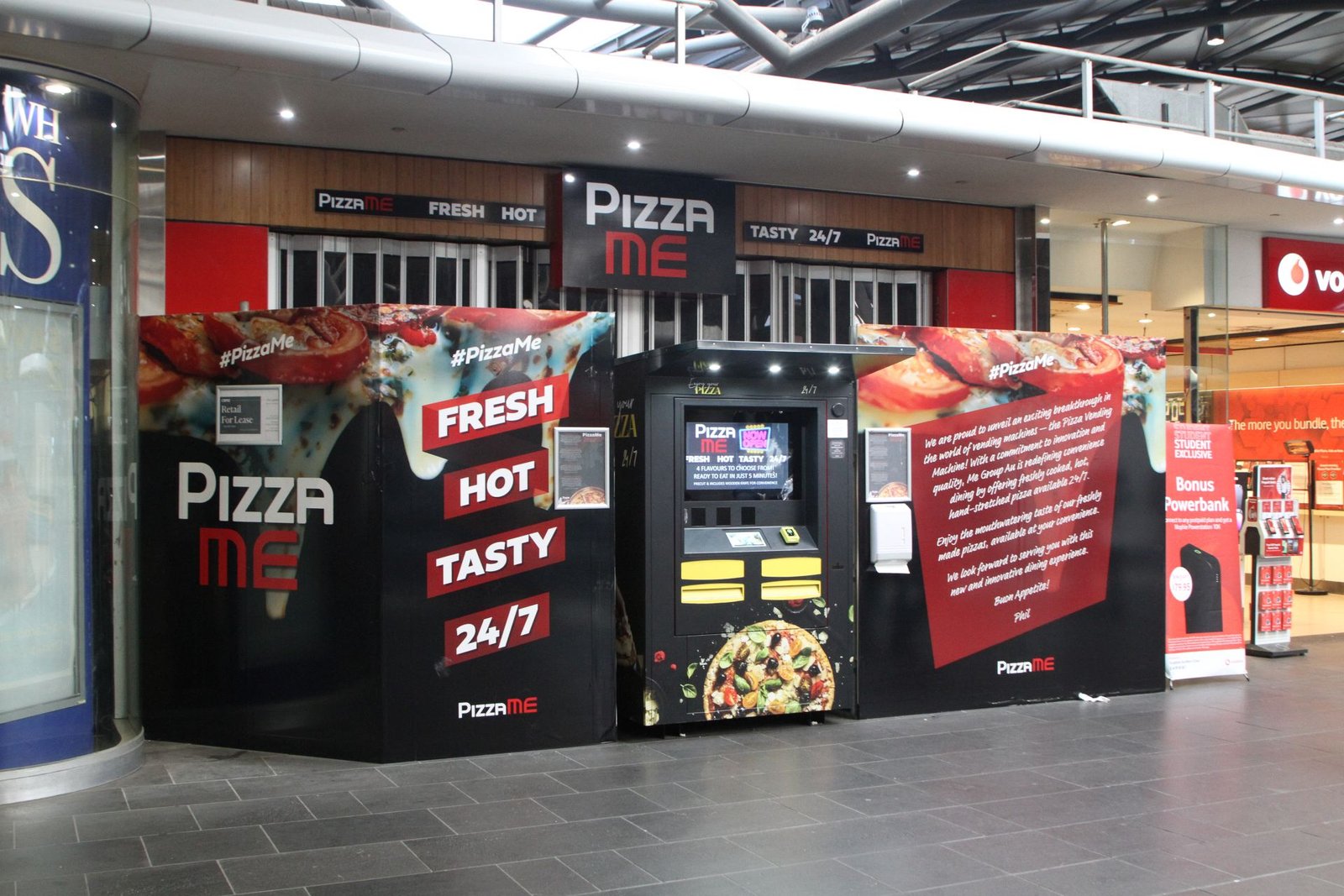
Pizza Vending Machines for Train & Metro Stations
Train and metro stations are high-flow environments where speed, reliability, and 24/7 availability matter. VendoPizza machines deliver hot meals on demand without queues or staffing, making them ideal for commuters and travelers across Europe. For insights into European railway infrastructure, see the European Union Agency for Railways.
New to vending? Start here: Start a Pizza Vending Business . For European travel statistics, check EU passenger transport data.
Why Train & Metro Stations Are High-Performance Locations
Public transport hubs produce predictable demand every day. Morning and evening commuter peaks, late-night travel, and limited food options during off-hours create strong conditions for automated meals. Pizza performs particularly well in stations because it is familiar, filling, and easy to take on the move. Research from transportation studies shows food availability impacts travel satisfaction.
Whether you’re an individual operator starting with one machine or a station retail manager planning multiple sites, the goal is the same: place the machine where passengers naturally pause, make the buying process quick, and keep uptime high. The future of station retail increasingly includes automated food solutions.
Passenger Behaviour That Drives Sales
Stations have three consistent customer groups. Understanding them improves placement and conversion. See travel behavior research.
- Daily commuters: repeat customers who buy fast meals on routine routes
- Connection travelers: people waiting 10–30 minutes and actively seeking food
- Off-peak users: late-night and early-morning customers with fewer open options
- Tourists & visitors: unfamiliar travelers looking for convenient meal options
What Makes Placement “Station-Friendly”
The best locations are visible and safe without blocking passenger flow. Station design principles emphasize passenger experience.
- Ticket halls and main concourses with high visibility
- Near escalators/elevators where people slow down
- Platform access corridors with waiting zones
- Areas with limited competing food outlets
- Transition zones between transport modes
Best Installation Spots Inside Stations
High foot traffic alone does not guarantee sales. In transport hubs, the best-performing placements are where passengers have time to notice, decide, and order. Concourse intersections, ticketing areas, and platform access points often outperform narrow walkways. The National Academies of Sciences provides guidelines on passenger flow management.
Strong Placement Zones
- Main concourse with open sightlines and seating areas
- Near ticket machines or information points
- Close to platform entrances (not blocking gates)
- Underground corridors where food is limited
- Transition areas between train and metro lines
Where to Avoid (For Approvals + Safety)
- Emergency exits and evacuation routes (CLP regulations)
- Narrow passages with heavy two-way flow
- Areas with strict security restrictions
- Locations with no convenient restocking access
- Direct sunlight or extreme temperature zones
Peak Sales Times in Transport Hubs
Stations have predictable peaks. Designing for these peaks improves throughput and customer satisfaction. Pizza vending works well because it offers a complete meal quickly, with clear on-screen ordering and consistent quality. European mobility strategy emphasizes improving passenger experience.
Typical Station Peaks
- Morning commute: 06:00–09:00 (breakfast and early meals)
- Midday lull: 11:00–14:00 (lunch and connection travelers)
- Evening commute: 16:30–19:30 (dinner and take-home meals)
- Late evening: 20:00–23:00 (when shops close and travel continues)
- Weekend peaks: Different patterns with leisure travelers
Why 24/7 Availability Matters
- Captures off-peak sales with less competition
- Serves station staff and travelers when outlets are closed
- Generates revenue on weekends and holidays
- Provides service during irregular travel schedules
- Builds reliability reputation among regular commuters
Fresh vs Frozen Pizza for Train & Metro Stations
Both formats perform well in stations, but the best choice depends on the station type, access rules, and how easy restocking is. We recommend selecting the setup that matches your operating plan and the station’s technical requirements. Consider EU food waste reduction goals in your decision.
Fresh Pizza Vending Machines
Best for major hubs where dwell time is higher and you want a premium customer experience.
- Strong visual appeal and higher perceived value
- Ideal for city centres and large interchanges
- Great for branding in high-visibility areas
- Premium pricing potential
- Appeals to tourists and leisure travelers
Frozen Pizza Vending Machines
Best for smaller stations or underground corridors where logistics need to stay simple.
- Simpler restocking routine
- Stable, consistent performance
- Strong for commuter-focused stations
- Lower maintenance requirements
- Better for locations with limited access
Approvals, Security Access, and Station Operations
Most stations require approval before any installation. This usually involves confirming technical specifications, footprint, power requirements, and a simple maintenance plan. Pizza vending is often easier to approve than staffed outlets because it requires minimal space and no permanent staff. Review EU retail regulations for compliance.
What Station Operators Usually Ask For
- Machine dimensions and placement plan
- Power requirements and safety information
- Cleaning and maintenance routine
- Restocking schedule and access requirements
- Insurance and liability documentation
- Energy efficiency and noise level data
Restocking & Servicing in Secure Locations
- Plan visits outside peak hours when possible
- Use remote monitoring to avoid unnecessary trips
- Keep spare parts and support ready to reduce downtime
- Coordinate with station security for access
- Maintain clear communication with station management
Who This Setup Is Best For
Train and metro stations suit both first-time operators and experienced vending businesses. Many owners start with one machine in a single station to validate performance, then expand into additional hubs once demand is proven. The European Vending Association provides industry insights.
Best for Individual Buyers
- Start with one machine in a commuter station
- Build repeat customers through daily traffic
- Scale to a second location once performance is stable
- Focus on stations with predictable patterns
- Use remote monitoring to manage operations
Best for Multi-Site Operators
- Rollout across multiple stations or regions
- Centralise restocking and maintenance routines
- Improve visibility with consistent branding
- Negotiate better terms with station operators
- Implement fleet management systems
Frequently Asked Questions
Here are the most common questions we receive about installing pizza vending machines in train and metro stations across Europe. Additional resources available from EU passenger rights.
Do train and metro stations allow pizza vending machines?
Where do pizza vending machines perform best inside stations?
Can the machine handle peak commuter demand?
Is fresh or frozen pizza better for metro stations?
How do operators restock machines in secure stations?
How do I request pricing for a station installation?
Planning a Train or Metro Station Installation?
Whether you’re installing one machine or rolling out across multiple stations, we’ll help you choose the right model, confirm requirements, and support you with service and warranty options for Europe. For European transport partnerships, explore EU mobility initiatives.