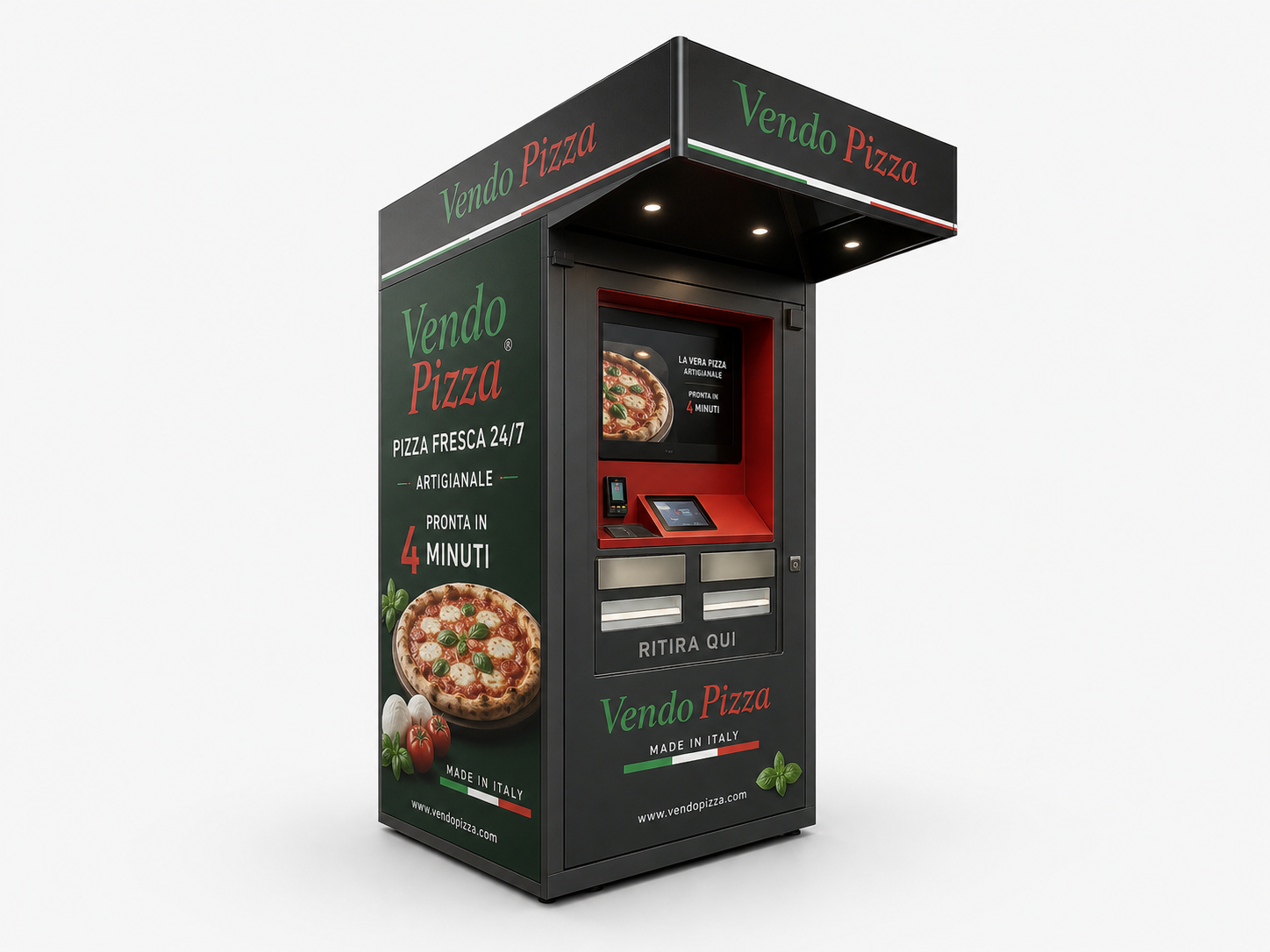
Buying a pizza vending machine is a commercial equipment decision, not simply another vending-machine purchase. The machine has to fit your location, electrical supply, food workflow, replenishment schedule, payment system, maintenance capabilities and local operating requirements.
That is why the most important question is not simply “How much does a pizza vending machine cost?” It is whether the machine you are buying can operate reliably and support a viable business model under the conditions of your specific site.
A machine can have an attractive purchase price and still become an expensive investment if the site needs electrical upgrades, the capacity is too small, spare parts are difficult to obtain, the food workflow does not match your operation, or the supplier's support terms are unclear.
This guide gives you 25 questions to ask a pizza vending machine supplier before placing an order. Use it when comparing manufacturers, reviewing quotations, preparing a site, or deciding between a fresh and frozen pizza vending machine.
In This Guide
- Machine specifications and capabilities
- Site, installation and daily operation
- Pizza, ingredients and food safety
- Price, total cost and commercial terms
- How to compare pizza vending machine suppliers
- Fresh vs. frozen pizza vending machines
- Documents to request before paying
- Buying mistakes to avoid
- Pizza vending machine ROI and profitability
- Frequently asked questions
Key Takeaways for Serious Buyers
- Start with the business model: Decide whether a fresh or frozen workflow fits your products, staffing, replenishment process and location.
- Verify the site before ordering: Confirm electrical supply, dimensions, access, environmental conditions, security and installation requirements.
- Calculate total cost, not just machine price: Include shipping, taxes, installation, payment hardware, software, initial stock, maintenance and site work.
- Demand model-specific documentation: The quotation, technical specification, warranty and conformity documents should relate to the exact machine you are purchasing.
- Do not rely on generic ROI promises: Sales volume, food cost, pricing, rent, replenishment and location traffic determine the economics of an individual site.
What Should You Check Before Buying a Pizza Vending Machine?
Before you compare brands or negotiate the purchase price, evaluate five areas: machine capability, site requirements, food safety, total cost of ownership and after-sales support.
The following 25 questions are designed to turn a sales conversation into a proper due-diligence process. Ask the supplier for written answers wherever possible and make sure important commitments appear in the quotation, contract or technical documentation.
1. Machine Specifications and Capabilities
The first step is understanding exactly what you are buying. Pizza vending machines can automate very different food-production workflows, so two machines with similar-looking cabinets may require very different operating models.
1. Is it a frozen stock-and-bake machine or a fresh pizza preparation system?
This is one of the most important questions in the entire buying process.
A frozen stock-and-bake machine stores prepared frozen pizzas and retrieves them for programmed cooking after the customer places an order. A fresh system can use a fresh-dough or refrigerated fresh-bake workflow depending on the exact platform and configuration.
These approaches affect ingredient handling, recipe flexibility, replenishment, cleaning, operating complexity, food costs and initial investment.
Compare the current Frozen Pizza Vending Machine and Fresh Pizza Vending Machine options before deciding which operating model fits your location.
2. What is the actual usable capacity?
Do not assume that a machine's advertised capacity equals the number of pizzas you will always be able to sell from one load.
Ask how capacity is calculated and whether it changes with pizza diameter, thickness, packaging, tray configuration, recipe mix or storage layout.
Vendo Pizza currently presents Frozen Series capacities of up to 60, 80, 100 and 120 pizzas, while the Fresh Series is presented in capacities up to 60, 80, 100, 120 and 130 pizzas. The final usable capacity should still be confirmed for the exact configuration and pizza format you intend to use.
3. What is the complete order-to-serve time?
Ask for the complete customer journey rather than only the oven cycle.
You want to understand the time required for payment, product retrieval or preparation, cooking and dispensing.
Vendo Pizza's current Frozen Series information references approximately 2–4 minutes for cooking/service, but the actual cycle depends on the recipe, oven technology and programmed profile.
Throughput matters because a machine can have sufficient daily capacity but still create queues during peak periods.
4. What are the exact dimensions and net weight?
Request the final dimensions in millimetres, including any doors, service clearances or components that extend beyond the main cabinet.
Also confirm the net and shipping weight. Check door widths, elevator dimensions, loading access, floor loading, delivery access and the space required for maintenance.
5. What are the electrical requirements?
Never assume that a commercial pizza vending machine can connect to an ordinary outlet.
Ask the supplier to specify the required voltage, phase, rated power, maximum current, breaker requirements and recommended electrical installation.
Vendo Pizza's published Frozen Series planning information indicates that electrical requirements can vary between 220–240V and 380–415V depending on the selected equipment. Your electrician should work from the final technical sheet for the exact machine rather than a generic specification.
6. What ambient conditions can the machine handle?
Temperature and weather exposure can materially affect machine performance.
Ask for the documented operating temperature range and clarify what happens in hot weather, cold weather, rain, snow, humidity and direct sunlight.
If the machine will be installed outdoors, ask whether cabinet heating, ventilation, insulation, weather protection or other environmental equipment is included in the quoted configuration.
2. Site, Installation and Daily Operation
A pizza vending machine is part of a physical site. Before purchasing, make sure the location can actually support the machine and the operating routine behind it.
7. Is the machine designed for indoor or outdoor installation?
Do not assume that an indoor machine can simply be placed outside.
Ask whether the quoted machine is an indoor model, sheltered outdoor configuration or purpose-configured outdoor machine. Confirm protection against rain, snow, temperature extremes, dust, sunlight and unauthorised access.
Also clarify whether a canopy, shelter or additional site protection is required.
8. What site preparation is required?
Ask for a site-preparation checklist before ordering.
Depending on the machine and location, this may include electrical work, a level installation surface, drainage, ventilation, network connectivity, lighting, security measures and sufficient service access.
The goal is simple: identify site costs before the machine arrives rather than after the purchase has been completed.
9. How often will the machine need to be restocked?
Capacity should be evaluated against actual sales velocity.
A machine that holds 60 pizzas may be perfectly adequate for one site and insufficient for another. Conversely, buying a larger machine than the location needs can tie up additional capital without creating additional sales.
Estimate expected daily sales, peak periods, delivery frequency, replenishment travel time and the maximum amount of stock you can safely keep in the machine.
10. What is the cleaning and sanitation procedure?
Ask the supplier to provide the daily, weekly and periodic cleaning schedule in writing.
Identify which food-contact areas require manual cleaning, which parts can be removed, which cleaning products are approved and how cleaning records should be maintained.
For fresh systems in particular, cleaning and ingredient handling should be treated as core operational processes rather than an afterthought.
11. What remote monitoring and management features are included?
Modern unattended food operations can benefit from remote visibility into sales, stock, temperature, machine status and alerts.
Ask exactly what the monitoring platform provides, whether connectivity is included, whether the machine requires a SIM card or Wi-Fi, and whether there are recurring software or connectivity charges.
12. What is known about reliability and critical components?
Ask the supplier which components are most critical to uptime: oven, refrigeration, dispensing mechanisms, payment terminal, touchscreen, sensors, pumps or other automated systems.
Rather than accepting a general statement that a machine is “highly reliable,” ask for documented service information where available, recommended preventive maintenance and common failure points.
3. Pizza, Ingredients and Food-Safety Requirements
The machine is only one part of the food operation. Your recipes, ingredients, storage conditions, cleaning procedures, allergen controls and local food-business obligations also need to be considered.
13. Can I use my own pizza recipes and ingredients?
Confirm exactly how much control you have over recipes and ingredients.
Ask whether you can source your own dough, cheese, sauces and toppings, whether ingredients must meet specific technical specifications, and whether the supplier imposes an approved-supplier list.
This matters because recipe freedom can influence your menu, food costs, branding and ability to adapt the product to local demand.
14. How are ingredients stored and how long can they remain in the machine?
Ask the supplier to define the storage conditions and operating limits for every relevant ingredient or prepared product.
For frozen systems, confirm the required storage temperature, alarms and procedure for temperature excursions. For fresh or refrigerated systems, establish the documented holding limits, stock rotation process and what happens if refrigeration falls outside the permitted range.
15. Does the exact machine have the required CE and conformity documentation?
For European projects, ask for the EU Declaration of Conformity for the exact finished machine and configuration.
CE marking should not be treated as a generic “EU approval” or as proof that every aspect of a vending operation is compliant. The manufacturer or party responsible for placing the finished product on the market must address the requirements applicable to that machine.
Your due-diligence file should identify the exact manufacturer, model, applicable requirements, declaration, technical documentation and any relevant component or configuration differences.
You can also review our Pizza Vending Machine Certifications and Compliance Guide for a more detailed explanation of CE marking and European compliance considerations.
16. Are the ingredients compatible with the automated system?
Automation introduces physical constraints that do not exist in a conventional pizzeria.
Ask about cheese texture, sauce viscosity, dough characteristics, topping size, ingredient temperature and portion consistency.
If you plan to introduce your own recipes, test them with the actual machine configuration before committing to a large rollout.
17. What percentage of ingredients or product is wasted?
Waste directly affects food cost and therefore gross margin.
Ask the supplier or existing operators for realistic waste assumptions and identify where waste occurs: preparation, portioning, failed orders, expired stock, cleaning cycles or product handling.
Then include those assumptions in your own financial model rather than using an idealised food-cost percentage.
18. How are allergens and cross-contamination managed?
If you sell products containing common allergens or offer vegan, vegetarian, gluten-free or other specialised recipes, understand how the machine handles ingredient separation and cleaning.
Ask whether separate storage areas are available, whether components need to be cleaned between recipes and how the system supports the food-information and allergen-management procedures required for your operation.
4. Price, Total Cost and Commercial Terms
The purchase price is only one component of the investment. A proper comparison should look at the total cost of ownership and the commercial terms attached to the machine.
19. What is the total cost of ownership for the first year?
Ask the supplier for a complete written quotation and separate one-time and recurring costs.
Depending on the project, your budget may need to include the machine, payment hardware, shipping, taxes, installation, electrical work, site preparation, connectivity, software, branding, initial stock, spare parts and maintenance.
Vendo Pizza currently lists starting prices from €7,500 for a Frozen 60 indoor configuration and from €16,000 for a Fresh 60 indoor configuration. These are starting configurations rather than all-in project costs, so the final quotation should be used for investment planning.
Review the pizza vending machine cost guide and Frozen Pizza Vending Machines page for current published configurations.
20. What does the warranty actually cover?
Do not stop at the headline warranty period.
Ask whether the warranty covers parts, labour, travel, refrigeration, heating elements, electronics, payment hardware and other critical components.
Also ask what can void the warranty, including unauthorised modifications, incorrect installation, improper cleaning, unsuitable ingredients or operation outside the specified environmental conditions.
21. What is the expected lead time?
Ask for the expected production, preparation, shipping and installation timeline.
If you are purchasing a customised configuration, ask whether payment hardware, branding, electrical specifications or outdoor equipment can affect the delivery schedule.
Have the expected delivery basis and any important deadlines included in the commercial documentation.
22. Who installs the machine and trains the operator?
Clarify whether installation is included in the quotation or handled separately.
Training should cover loading or replenishment, cleaning, basic troubleshooting, payment systems, temperature monitoring, stock rotation and escalation procedures.
Ask whether training is remote or on-site and whether operator documentation is supplied.
23. Where are spare parts and technical support located?
A machine can be commercially attractive on paper but difficult to operate if a critical component takes weeks to obtain.
Ask which parts are stocked locally or regionally, which components have the longest lead times, who performs repairs and how replacement parts are ordered.
If you plan multiple machines, also ask whether the supplier offers a recommended spare-parts package for operators.
24. What does the site-specific ROI calculation look like?
Treat supplier ROI figures as a starting point for discussion, not a guaranteed outcome.
Build your own model using realistic assumptions for:
- Expected pizzas sold per day
- Average selling price
- Ingredient and packaging cost per pizza
- Payment processing fees
- Waste and spoilage
- Rent or site commission
- Electricity and connectivity
- Replenishment labour and transport
- Maintenance and repairs
- Taxes and other local operating costs
Then calculate your break-even sales volume and test conservative, expected and strong-sales scenarios.
25. What happens if the machine breaks down?
This is where the supplier relationship becomes especially important.
Ask whether the supplier offers a formal service-level agreement and what it covers.
Clarify the support channel, initial response time, remote diagnostics, technician availability, spare-parts process, escalation procedure and target resolution time.
Most importantly, find out whether those commitments are contractual or simply sales-team assurances.
How to Compare Pizza Vending Machine Suppliers
Once you have answers to the 25 questions, compare suppliers using the same checklist. This prevents the lowest advertised machine price from becoming the only factor in your decision.
A useful supplier comparison should include:
- Machine configuration: Fresh or frozen, capacity, pizza size and workflow.
- Site requirements: Power, dimensions, environmental conditions and installation work.
- Food operation: Ingredients, storage, cleaning, allergens and replenishment.
- Technology: Payment systems, connectivity, monitoring and software.
- Commercial terms: Machine price, shipping, installation, taxes and recurring costs.
- Support: Warranty, spare parts, training and technical response.
- Documentation: Technical specifications, conformity documentation and operating instructions.
Fresh vs. Frozen Pizza Vending Machines: Which Should You Consider?
There is no universally correct machine type. The appropriate workflow depends on the products you want to sell, your operating capabilities, the site and the level of recipe flexibility you require.
Frozen stock-and-bake systems can provide a comparatively straightforward prepared-pizza loading and cooking workflow. They may be attractive where operational simplicity, standardisation and a lower initial machine price are important.
Fresh or fresh-bake systems can provide greater flexibility around recipes and fresh preparation, but they can also introduce additional operational requirements around ingredients, cleaning, replenishment and food handling.
Compare the two current Vendo Pizza product families here: Frozen Pizza Vending Machines and Fresh Pizza Vending Machines .
What Documents Should You Request Before Paying?
Before placing a deposit, ask the supplier to provide a documentation package for the exact machine and configuration you are buying.
Recommended Pre-Purchase Document Checklist
- Formal commercial quotation
- Exact manufacturer and model identification
- Technical specification sheet
- Electrical requirements
- Installation requirements
- Operating and environmental limits
- EU Declaration of Conformity where applicable
- Relevant operating and maintenance documentation
- Warranty terms and exclusions
- Installation scope
- Training scope
- Spare-parts and service arrangements
- Payment-system specifications
- Connectivity and software terms
- Shipping and delivery terms
The key principle is simple: the documentation should describe the machine you are actually buying, not a generic machine family or unrelated component.
Pizza Vending Machine Buying Mistakes to Avoid
Many problems can be prevented before the machine is ordered. Watch for these common purchasing mistakes:
- Choosing on price alone: The cheapest machine may not have the lowest total cost of ownership.
- Ignoring the electrical supply: Site power should be confirmed before the purchase is finalised.
- Overestimating capacity: Advertised capacity does not automatically equal practical sales capacity.
- Underestimating replenishment: A remote site may require significant labour and transport even with a large-capacity machine.
- Assuming indoor and outdoor machines are interchangeable: Outdoor installations require appropriate environmental and site planning.
- Accepting verbal promises: Important commercial and technical commitments should appear in the quotation or contract.
- Using generic ROI assumptions: Your location, pricing, food costs and sales volume determine your actual economics.
- Ignoring after-sales support: Downtime can matter more than a small difference in purchase price.
Is a Pizza Vending Machine a Good Business Investment?
The answer depends on the individual business case.
A pizza vending machine can create an unattended or extended-hours food-sales channel, but the machine itself does not create demand. The commercial outcome depends on location quality, customer traffic, product pricing, food costs, operating discipline, uptime, replenishment and local competition.
Before purchasing, build a conservative financial model and determine how many pizzas must be sold each day to cover your fixed and variable costs.
If the investment only works under an optimistic sales scenario, treat that as a signal to investigate the site or business model further.
There is no universal pizza vending machine payback period. Sales volume and profitability vary significantly by location, selling price, food cost, site fees, operating expenses, machine configuration and customer demand. Use your own site-specific numbers rather than relying on a generic payback promise.
Final Pizza Vending Machine Buying Checklist
Before signing a purchase agreement, you should be able to answer all of these questions confidently:
- What exact machine model am I buying?
- Is the workflow fresh, refrigerated fresh-bake or frozen stock-and-bake?
- What is the practical usable capacity?
- What is the complete order-to-serve time?
- What power supply does the machine require?
- Can my site physically accommodate it?
- Is the configuration suitable for indoor or outdoor installation?
- What site preparation is required?
- How often must it be replenished?
- What are the cleaning requirements?
- What monitoring and payment systems are included?
- What ingredients and recipes are supported?
- How are temperature control and food safety managed?
- What conformity documents apply to the exact machine?
- What is the complete first-year cost?
- What exactly does the warranty cover?
- When will the machine be delivered?
- Who installs and trains the operator?
- Where are spare parts sourced?
- What happens when