Supplier due diligence for commercial pizza vending projects
How to Choose a Reliable Pizza Vending Machine Supplier
Choosing the machine is only half of the purchasing decision. A reliable pizza vending machine supplier should be able to identify the exact model being offered, explain who manufactures it, provide model-specific documentation, confirm how your pizza will be tested, define payment and installation responsibilities, and put warranty and after-sales support in writing.
What should you look for in a pizza vending machine supplier?
Choose a supplier that can prove who it is, identify the exact machine and manufacturer, provide the relevant technical and conformity documents, explain how your pizza and payment setup will be validated, and state warranty, spare-parts, installation, delivery and support responsibilities in writing. Do not choose solely on the lowest machine price, the largest claimed capacity or a CE logo on a sales page.
Start by understanding who is actually selling the machine
Manufacturer, Distributor, Reseller or Project Supplier?
A supplier does not need to own the factory to be reliable. What matters is whether the commercial chain is clear and whether the seller can support the finished machine it is offering.
Manufacturer
Builds the machine and normally controls design, production, conformity assessment and technical documentation. A manufacturer may sell directly or through distributors.
Distributor or Reseller
Sells equipment manufactured by another company. A reliable distributor should know the product, have access to required documentation and explain who handles warranty and technical escalation.
Project Supplier
May combine a machine from one manufacturer with payment hardware, branding, logistics, commissioning and support from several partners. The quotation should identify those responsibilities clearly.
Check the seller before you check the brochure
1. Verify the Supplier’s Legal and Commercial Identity
Before discussing a deposit, confirm that the legal entity on the quotation exists and that its registered details are consistent with the seller’s website, invoice, contract and bank beneficiary.
Company registration
For EU and EEA companies, use the relevant national business register or the European e-Justice Business Registers Interconnection System where available. Confirm the registered company name and legal status.
VAT verification
Where an EU VAT number is supplied for cross-border trade, VIES can confirm whether the VAT number is valid in the relevant national system. A valid VAT result is one check, not proof of overall supplier quality.
Bank beneficiary
The payee named on the invoice should make commercial sense against the contracting entity. Treat unexplained bank-account changes, personal accounts or last-minute beneficiary changes as issues requiring independent verification.
A procurement tool you can use with every seller
The 100-Point Pizza Vending Machine Supplier Scorecard
Score every shortlisted supplier against the same criteria. Do not award points because a salesperson is responsive or because the website looks professional; award them only when the evidence is clear.
| Check | What strong evidence looks like | Weight |
|---|---|---|
| 1. Legal identity | Company can be verified; contracting name, invoice and payment beneficiary are coherent. | 8 |
| 2. Commercial role | Supplier explains whether it is manufacturer, distributor or project reseller and who backs the warranty. | 6 |
| 3. Exact model identity | Quotation names the model, generation, capacity, food workflow and included options. | 8 |
| 4. Conformity documentation | Model-specific declaration and applicable technical documents are available for the finished machine. | 10 |
| 5. Commercial references | Supplier can show relevant deployments, demonstrations or buyer references appropriate to the project. | 6 |
| 6. Food-workflow competence | Supplier can explain what is loaded, how it is stored, how the pizza is moved and what the operator must do. | 7 |
| 7. Payment competence | Terminal, merchant account, acquirer, currency, fees and destination-country compatibility are addressed. | 6 |
| 8. Site and installation competence | Supplier requests access, power, ventilation, service-clearance and environmental information before recommending a configuration. | 6 |
| 9. Product compatibility testing | Your intended pizza, dimensions, packaging and cooking programme are validated or a defined test process is offered. | 7 |
| 10. Warranty clarity | Duration, exclusions, parts, labour, response route and buyer responsibilities are written clearly. | 8 |
| 11. Spare-parts process | Supplier identifies common service parts, lead times and how replacements are ordered. | 7 |
| 12. Training and after-sales | Commissioning, operator training, remote assistance and escalation paths are defined. | 6 |
| 13. Logistics clarity | Delivery basis, packaging, freight, insurance and destination handling are stated. | 5 |
| 14. Payment security | Payment milestones, beneficiary and bank details are stable and consistent with the contract. | 5 |
| 15. Written transaction file | Quotation, accepted configuration, sales terms and responsibilities are complete enough to resolve disputes. | 5 |
| Total | Score from evidence, not promises. | 100 |
80–100: strong shortlist
The supplier has resolved most material questions. Remaining gaps should still be closed before payment.
65–79: clarify before committing
The project may be workable, but several commercial or technical items still need written evidence.
Below 65: unresolved risk
Do not allow a low price or urgent sales deadline to replace the missing documentation, testing or support detail.
The quotation must identify the actual equipment
2. Verify the Exact Pizza Vending Machine Being Offered
“Pizza vending machine” is a category, not a specification. A reliable supplier should be able to identify the model and explain how its food workflow differs from other machines it sells.
Model and generation
Ask for the exact manufacturer, model code, generation and capacity. If an older brochure or demonstration video is used, ask whether it shows the same version being quoted.
Food workflow
Confirm whether the machine forms fresh dough, uses refrigerated prepared components or stores complete frozen pizzas. These workflows create different cleaning, replenishment and food-safety responsibilities.
Included options
Identify the payment terminal, modem, outdoor package, branding, cash hardware, screen, telemetry, trays and other options rather than assuming they are included in the base price.
A logo on a webpage is not the technical file
3. Check CE Marking and Model-Specific Documentation
For European projects, ask which economic operator is responsible for placing the machine on the market and request the documentation applicable to the exact finished model and configuration.
EU Declaration of Conformity
Ask for the declaration that identifies the machine and applicable legislation. Do not treat a generic certificate from another model as evidence for the finished configuration.
Technical instructions
Request the user, installation, cleaning and maintenance information required to operate the selected machine correctly.
Importer or distributor role
EU guidance states that importers and distributors have responsibilities relating to compliant products and access to the necessary documentation. Ask which party performs that role for your transaction.
A supplier must understand the food—not only the cabinet
4. Ask How Your Actual Pizza Will Be Tested
Supplier credibility becomes much easier to judge when you move from brochure claims to your real product. A prepared pizza that fits the rack can still fail during transfer or cooking if the weight, crust, toppings, packaging or starting temperature are unsuitable.
Dimensions and packaging
Confirm diameter, height, total weight, crust profile and any tray or box dimensions used during storage and dispensing.
Cooking programme
Ask how time, temperature and oven profile are established for the intended pizza and what happens if the recipe changes later.
Acceptance test
Agree what a successful product test looks like before the machine is considered commercially ready for your menu.
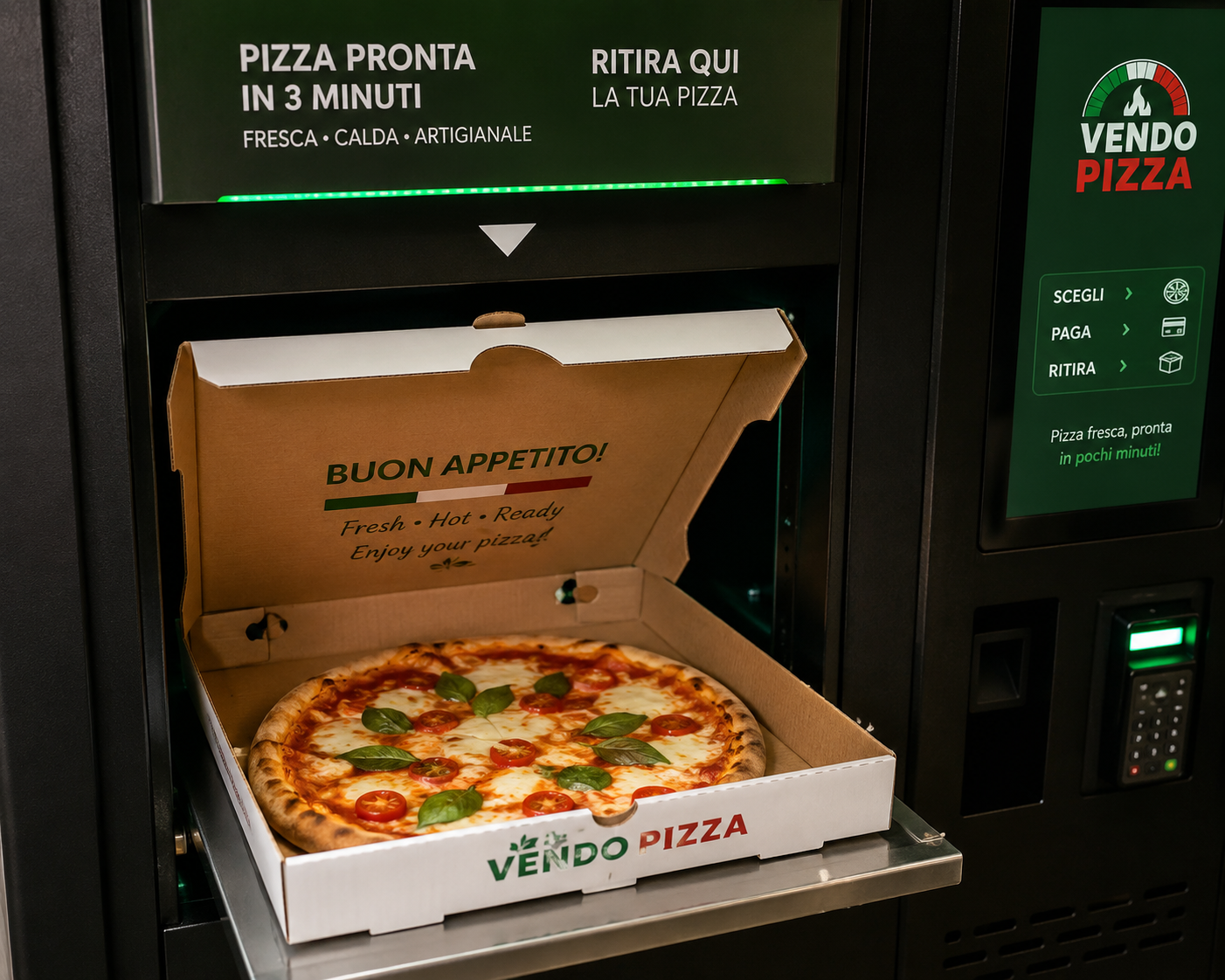
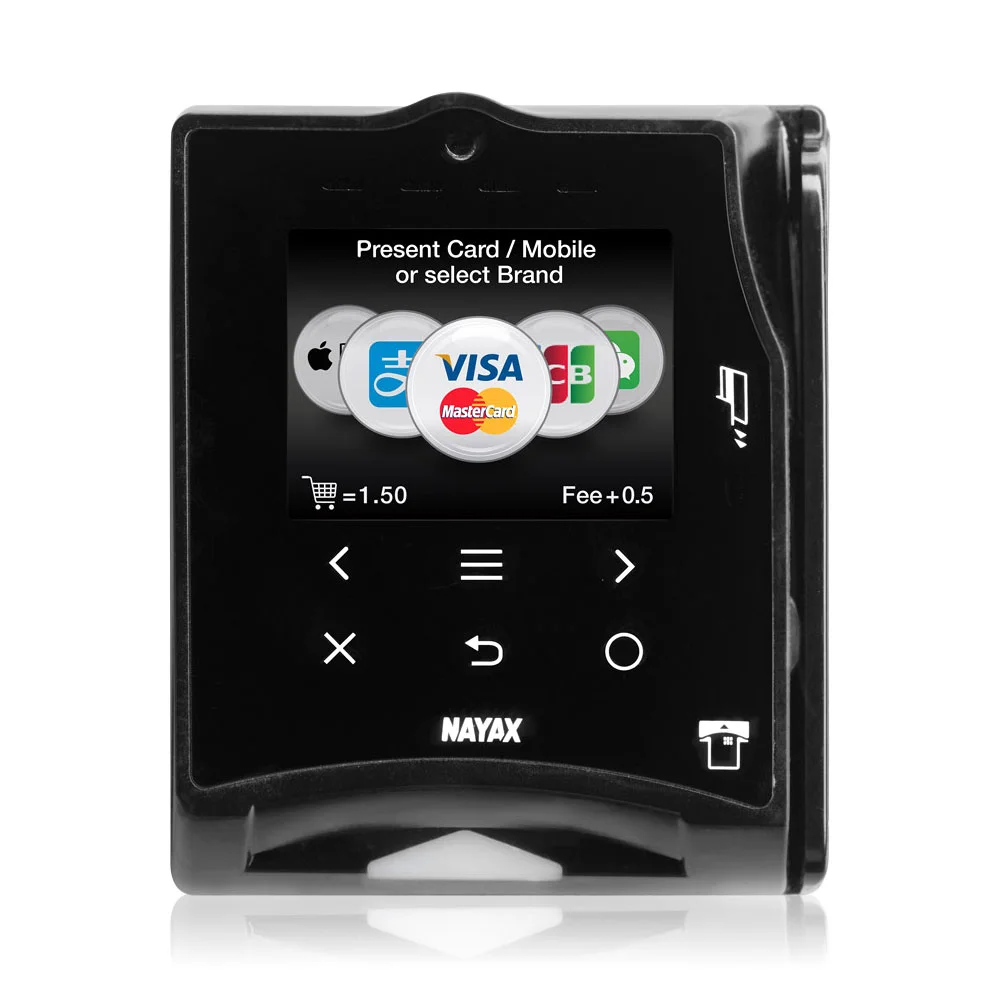
A terminal logo is not a complete payment plan
5. Check Payment and Connectivity Competence
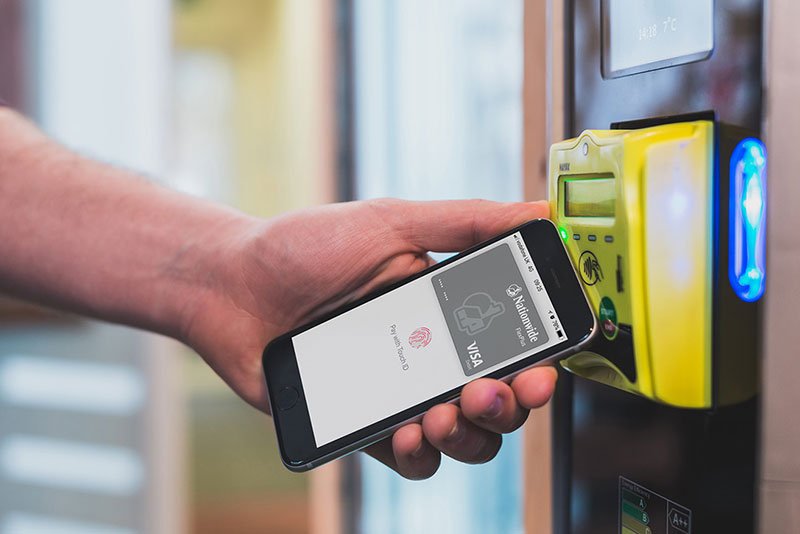
A reliable supplier should explain how the payment terminal, merchant account, acquirer, currency, connectivity and vending-management platform fit together in your destination country.
Terminal and acquiring
Confirm which terminal is fitted, which acquiring arrangement is required and whether the destination country and transaction currency are supported.
Fees and subscriptions
Separate card transaction fees, merchant settlement terms, SIM/data costs and cloud or telemetry subscriptions from the machine purchase price.
Remote-management scope
Ask which stock, transaction, temperature and machine-status information is available remotely and who owns the platform account.
The supplier relationship matters most after delivery
6. Review Warranty, Spare Parts, Training and After-Sales Support
A long warranty headline is less useful than a precise support process. Ask what happens on the first morning a payment terminal fails, a temperature alarm appears or a mechanical part stops moving.
Warranty scope
Confirm the warranty period, covered parts, exclusions, consumables, labour position, travel costs and buyer maintenance obligations.
Spare-parts availability
Ask for the recommended spare-parts kit, typical parts lead times and how urgent replacements are dispatched.
Technical escalation
Confirm the support channel, working hours, remote-diagnostics capability and when an issue requires an on-site technician.
Commissioning
Clarify whether the supplier assists with setup, payment activation, recipe testing, menu configuration and acceptance testing.
Operator training
Training should cover replenishment, cleaning, alarms, ordinary resets, product testing and when the operator must stop sales and contact support.
Documentation after handover
Keep manuals, warranty terms, technical contacts, spare-parts references and the final accepted configuration together in the project file.
Make the paperwork match the sales conversation
7. Compare the Complete Quotation, Not Only the Machine Price
A commercial quotation should make it possible to understand exactly what is being purchased, what is excluded, when payment is due and who is responsible for getting the machine from the factory or warehouse into service.
| Quotation area | What should be clear |
|---|---|
| Machine | Manufacturer, exact model, generation, capacity, food workflow, indoor/outdoor package and included options. |
| Price basis | Currency, VAT/tax basis, quantity, payment terminal, branding, software, cash modules and other options. |
| Delivery | Packaging, freight basis, insurance, destination, unloading and responsibility for customs or destination charges. |
| Installation | Placement, electrical connection, commissioning, recipe setup, payment activation and acceptance testing. |
| Payment | Deposit or milestone amounts, due dates, beneficiary details and conditions for the next payment stage. |
| Warranty/support | Duration, exclusions, spare-parts process, remote support and any on-site-service limitations. |
| Documentation | Technical sheet, manuals, conformity documents and project-specific instructions. |
Problems to resolve before you pay
10 Pizza Vending Machine Supplier Red Flags
One incomplete answer does not automatically mean a supplier is unreliable. Several unresolved red flags together, however, are a reason to delay payment until the transaction is clear.
No exact model on the quotation
The supplier quotes “100-pizza vending machine” without manufacturer, model code, generation or configuration.
Generic CE claims
The seller shows a CE logo or certificate image but cannot provide documentation tied to the exact machine being supplied.
Machine workflow is vague
Terms such as “fresh”, “AI” or “automatic” are used without explaining what food is loaded and what the machine actually does.
No product test
The supplier guarantees that your pizza will work based only on diameter, without checking weight, height, packaging or cooking performance.
Payment support is assumed
The seller says “Nayax included” or “cards accepted” but cannot explain the merchant-account, acquirer, country or fee setup.
Warranty is only a headline
The quotation says “one-year warranty” but does not explain covered parts, exclusions, labour, shipping or reporting procedure.
No spare-parts plan
The supplier cannot explain how common service parts are identified, priced or shipped after installation.
Site questions are ignored
A supplier recommends an outdoor or high-capacity machine without asking about power, access, weather, service clearance or placement.
Bank details change unexpectedly
The beneficiary changes late in the transaction and the seller pressures you to pay before independent verification.
Artificial urgency replaces evidence
A discount deadline or “last machine available” is used to pressure payment before documents, configuration or responsibilities are resolved.
Compare suppliers on the same evidence
A Simple Final Supplier Comparison
Use one row per supplier. If a field cannot be answered, write “unresolved” rather than filling the gap with an assumption.
| Decision field | Supplier A | Supplier B | Supplier C |
|---|---|---|---|
| Legal entity verified | Yes / No | Yes / No | Yes / No |
| Exact model identified | Model | Model | Model |
| Food workflow | Fresh / Refrigerated / Frozen | Fresh / Refrigerated / Frozen | Fresh / Refrigerated / Frozen |
| Model documents received | Yes / No | Yes / No | Yes / No |
| Your pizza tested | Yes / Planned / No | Yes / Planned / No | Yes / Planned / No |
| Payment setup defined | Yes / No | Yes / No | Yes / No |
| Warranty fully written | Yes / No | Yes / No | Yes / No |
| Parts/support process | Clear / Unclear | Clear / Unclear | Clear / Unclear |
| Delivered project price | Amount | Amount | Amount |
| 100-point score | __/100 | __/100 | __/100 |
Common supplier-selection questions
Pizza Vending Machine Supplier FAQ
How do I choose a reliable pizza vending machine supplier?
Verify the company, identify its role in the supply chain, confirm the exact machine and model documents, test your intended pizza, define payment and installation responsibilities, and review warranty, spare parts and support in writing before paying.
Is buying directly from a manufacturer always better?
No. A manufacturer may offer direct technical access, but a capable distributor can add destination-market expertise, payment integration, logistics and local support. Compare the evidence and responsibilities rather than the label.
How can I verify a European supplier?
Check the relevant national company register or the European e-Justice business-register service where applicable. For EU cross-border VAT numbers, VIES can be used to check the VAT status returned by the relevant national database.
Should a pizza vending machine supplier provide CE documents?
For equipment placed on the European market, ask for the model-specific conformity documentation required for the finished machine, including the applicable EU Declaration of Conformity. Do not rely on a CE logo alone.
What should be included in a supplier quotation?
The quotation should identify the machine, capacity, workflow, included options, price basis, payment system, delivery scope, installation responsibilities, warranty and applicable documentation.
Should my pizza be tested before I buy the machine?
Where your own prepared pizza will be used, product testing is strongly advisable. Diameter alone does not confirm storage, transfer, cooking and dispensing compatibility.
How do I compare two suppliers with different prices?
Normalise the quotation. Compare the same capacity, food workflow, payment hardware, outdoor/indoor package, software, freight, installation, warranty and support. Then compare the total project scope rather than only the cabinet price.
What should I ask about warranty?
Ask about duration, covered components, exclusions, consumables, labour, travel, shipping of replacement parts, required maintenance and the procedure for opening a warranty claim.
What should I ask about spare parts?
Request a recommended spare-parts list, current lead times, part-identification method and the process for urgent shipment. Ask which components are proprietary and which use established service channels.
How do I know whether the payment system will work in my country?
Confirm the terminal, acquiring arrangement, merchant account, supported currency, network connection, transaction fees and settlement terms for the destination country. A terminal brand name alone is not enough.
Is the cheapest supplier usually the best option?
No. A lower price can be legitimate, but only compare prices after the machine, options, documentation, delivery, warranty and support scopes have been made equivalent.
Can I use this checklist when evaluating Vendo Pizza?
Yes. The purpose of the guide is to give buyers a consistent procurement framework. Apply the same model, document, payment, testing, warranty and support checks to Vendo Pizza and to competing suppliers.
Primary and official references
Sources and Verification Tools
These sources support the supplier-verification and technical-documentation principles in this guide. Destination-specific legal advice may still be required for an individual project.
- European e-Justice Portal — Search for a Company in the EU Business Registers Interconnection System (BRIS) for company information from participating national registers.
- European Commission — VIES VAT Number Validation Official VAT validation service for EU Member States and Northern Ireland where applicable.
- European Commission — Importers and Distributors Official guidance on economic-operator responsibilities, documentation and CE-marked products.
- Let’s Pizza — Current Machine Generations Manufacturer example showing how workflow, interface, IoT and technical specifications can differ between machine generations.
- Nayax — Vending Management System Official information on remote vending management, inventory, transactions and machine-performance monitoring.
Choose the Supplier You Can Verify, Not the One Making the Biggest Promise
A reliable supplier should make the project easier to understand as you move closer to payment. The exact machine, documents, food test, payment configuration, warranty, support and delivery responsibilities should become clearer—not more ambiguous.